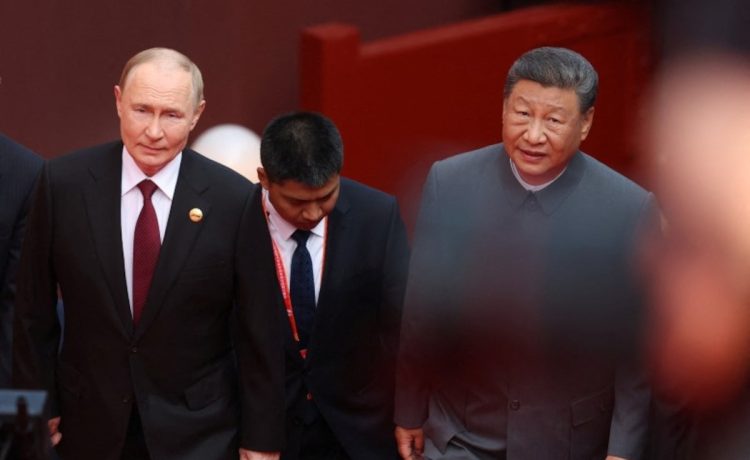
Chinese President Xi Jinping is set to host Russian President Vladimir Putin in Beijing for a two-day state visit, just days after a high-profile visit by U.S. President Donald Trump, as China seeks to project itself as a stable and predictable global power.
The visit, described by both sides as part of an “all-weather” partnership, marks Putin’s 25th trip to China and comes amid continued Western pressure on Beijing over its ties with Moscow during the ongoing war in Ukraine.
According to Chinese officials, discussions between the two leaders will cover bilateral cooperation and international issues of mutual concern, reinforcing what both countries describe as a strategic partnership that is resistant to external pressure.
The Kremlin and Beijing have both framed the relationship as one built on mutual support for each other’s “core interests,” particularly as Russia continues to face Western sanctions linked to the war in Ukraine.
China has maintained that it is a neutral party in the conflict and has repeatedly called for peace negotiations, while also continuing diplomatic and economic engagement with Russia.
Analysts say the timing of the meeting, following Trump’s visit, is intended to signal continuity in China’s foreign policy and counter perceptions that U.S. diplomacy could reshape Beijing’s strategic alignments.
Energy cooperation is expected to feature prominently in the talks, including ongoing discussions around the proposed Power of Siberia 2 pipeline agreement, which aims to expand Russian gas exports to China but has yet to resolve pricing and supply terms.
China has also been pursuing broader energy diversification strategies, including potential deals with Central Asian suppliers such as Turkmenistan, while balancing long-term supply security concerns.
Experts note that while China is unlikely to pressure Russia over the war in Ukraine, it continues to provide Moscow with diplomatic support at international forums and maintains trade flows that help cushion the impact of sanctions.
Beijing, however, continues to deny providing lethal military assistance and says it strictly controls exports of dual-use technologies.
The visit underscores China’s broader diplomatic strategy of engaging multiple global powers while positioning itself as a stabilising force in a period of geopolitical tension and fragmented global alliances.