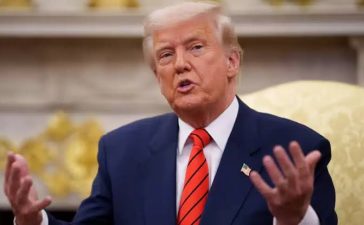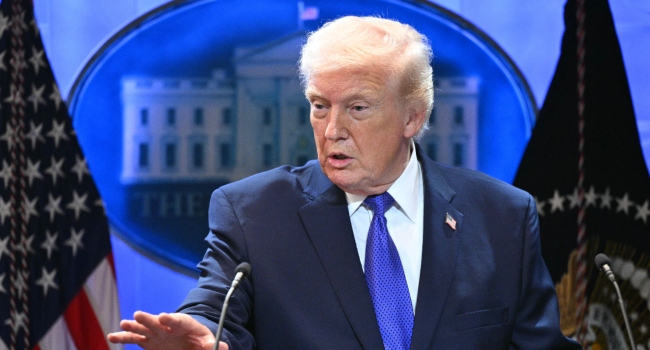
US President Donald Trump has announced the deployment of a delegation to Pakistan on Monday for renewed negotiations with Iran, while issuing stark warnings that Washington could target critical Iranian infrastructure if a deal is not reached.
In a post on his Truth Social platform on Sunday, Trump declared: “NO MORE MR. NICE GUY!” adding that the United States would “knock out every single Power Plant, and every single Bridge, in Iran” if diplomatic efforts fail.
The negotiations come amid a fragile ceasefire between Iran, the United States, and Israel, which is set to expire in three days. The truce temporarily halted a regional conflict triggered by surprise US-Israeli strikes on Iran on February 28.
So far, diplomatic engagement has been limited, with only one formal 21-hour session held in Islamabad on April 11. While no breakthrough was achieved, officials say preliminary groundwork for further talks has continued.
Trump described the US proposal as “a very fair and reasonable DEAL,” expressing hope that Iran would accept it. However, Iranian parliamentary speaker and chief negotiator Mohammad Bagher Ghalibaf stated that both sides remain “still far from the final discussion.”
The talks, initially focused on Iran’s nuclear programme, have become increasingly complex following the conflict and rising tensions over control of the Strait of Hormuz—a critical global energy route through which nearly one-fifth of the world’s oil and gas flows.
Security in Islamabad has been significantly tightened ahead of the expected negotiations, with road closures, increased checkpoints, and armed security deployed around key hotels, including the Marriott and Serena.
The US delegation is expected to arrive Monday evening. It is reportedly led by Vice President JD Vance and includes Middle East envoy Steve Witkoff, who previously participated in unsuccessful pre-war discussions.
A central sticking point remains Iran’s stockpile of near-weapons-grade enriched uranium, estimated at around 440 kilograms. Trump has claimed Iran agreed to surrender the material, suggesting US involvement in its retrieval. However, Iranian officials have firmly rejected the idea, stating the stockpile “will not be transferred anywhere.”
Iranian President Masoud Pezeshkian has also questioned demands to abandon what he called Iran’s “legal right” to a nuclear programme.
Meanwhile, tensions have escalated over the Strait of Hormuz. Iran briefly reopened the waterway on Friday following a regional ceasefire in Lebanon but closed it again amid continued US naval pressure. Tehran has warned that any unauthorised passage could be treated as hostile action.
Iranian officials have described the blockade as illegal, while maritime security agencies reported multiple incidents involving threats, projectiles, and attacks on vessels in the region over the weekend.
As diplomatic efforts continue under heavy geopolitical strain, both sides remain entrenched, with the outcome of the Islamabad talks expected to significantly influence regional stability and global energy markets.