Somaliland has officially opened its embassy in Jerusalem, marking a significant diplomatic milestone in its growing relations with Israel and strengthening its push for broader international recognition.
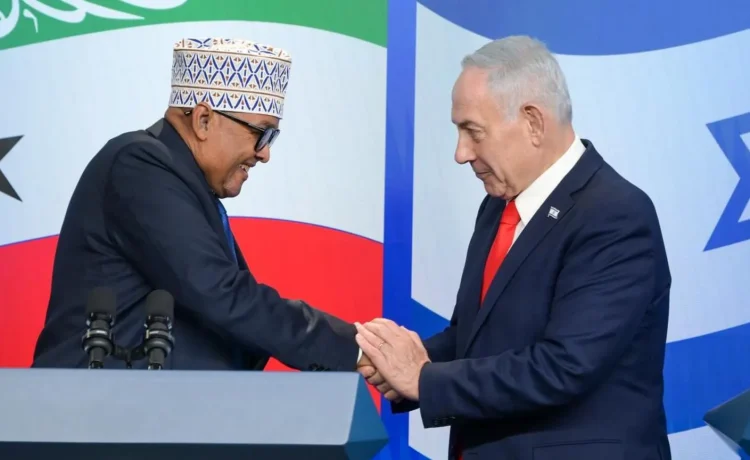
The inauguration ceremony was held during the first-ever state visit to Israel by Somaliland President Abdirahman Mohamed Abdullahi, also known as Irro. He was received in Jerusalem by Israeli Foreign Minister Gideon Saar, who described the visit as historic and symbolic of a new chapter in bilateral relations.
Saar said he was proud to “help write the first chapter” of diplomatic engagement between Israel and Somaliland, highlighting the strategic importance of the partnership.
The development follows Israel’s recent decision to become the first country to formally recognise Somaliland’s independence, a move that has significantly elevated the territory’s international profile.
Somaliland declared autonomy from Somalia in 1991 after the collapse of Somalia’s central government and a prolonged civil war. Although it has operated as a self-governing entity for more than three decades, it has struggled to gain widespread international recognition.
With the opening of its embassy in Jerusalem, Somaliland becomes only the eighth country to establish a diplomatic mission in the city, a location at the centre of longstanding geopolitical sensitivities due to the Israeli-Palestinian conflict.
Most countries maintain their embassies in Tel Aviv, citing the disputed status of Jerusalem under international law and ongoing peace negotiations.
Analysts say the move represents a diplomatic breakthrough for Somaliland, potentially strengthening its campaign for wider recognition on the global stage.
For Israel, the new diplomatic relationship underscores its efforts to deepen ties with strategic partners in the Horn of Africa region.
The development is expected to further shape geopolitical alignments in the region, while also drawing attention from other African and Middle Eastern states monitoring Somaliland’s evolving international status.