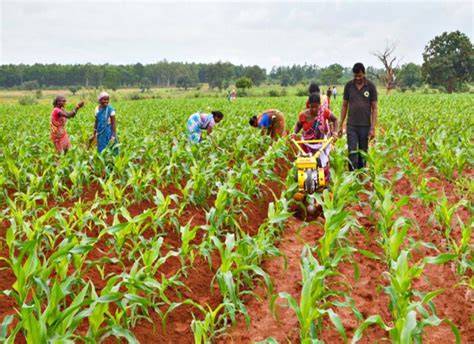
The Federal Government of Nigeria and the International Fund for Agricultural Development (IFAD) have launched a new partnership aimed at strengthening climate resilience in the country’s agricultural sector and creating greater opportunities for farmers and agribusinesses.
The initiative, known as the Climate-Smart Agribusiness Partnership for Resilience (CSAPR), is designed to support efforts to build a more resilient agricultural system capable of responding to the growing challenges posed by climate change.
The partnership comes at a time when Nigerian farmers are facing increasing pressures from changing weather patterns, irregular rainfall, flooding, drought, land degradation and other environmental challenges that threaten agricultural productivity and food security.
Agriculture remains a critical part of Nigeria’s economy and provides livelihoods for millions of people, particularly those living in rural communities. However, the sector’s vulnerability to climate-related shocks continues to create challenges for farmers and other participants across the agricultural value chain.
The new partnership is expected to promote climate-smart agricultural practices that can help farmers improve productivity while adapting to changing environmental conditions.
Climate-smart agriculture involves the adoption of farming techniques and technologies that improve agricultural productivity, strengthen resilience and, where possible, reduce the environmental impact of farming activities.
For Nigerian farmers, this could include improved access to climate-resilient seeds, modern farming technologies, better irrigation systems, improved soil management and enhanced agricultural extension services.
The partnership also places emphasis on agribusiness development and investment.
Stakeholders believe that strengthening agricultural value chains is essential to ensuring that farmers benefit fully from increased production. This requires improving access to markets, finance, storage facilities, processing infrastructure and transportation.
Without adequate infrastructure and market access, farmers can struggle to convert increased production into sustainable income.
By supporting agribusinesses and encouraging private-sector participation, the initiative could help create stronger connections between farmers, processors, distributors and consumers.
This approach is also expected to create opportunities for young people and women, who play important roles in Nigeria’s agricultural economy.
Agriculture remains one of the sectors with significant potential to generate employment for Nigeria’s growing youth population. Investments in agribusiness, food processing and agricultural technology could create new opportunities beyond traditional farming.
The partnership could also contribute to efforts to reduce post-harvest losses, which remain a major challenge for Nigerian farmers.
Improved storage, processing and transportation systems can help preserve agricultural produce and ensure that more food reaches consumers.
This is particularly important as Nigeria continues to focus on strengthening food security and reducing dependence on imported agricultural products.
Climate change has made the need for these investments even more urgent.
Extreme weather events can destroy crops, damage farmland and disrupt food supply chains. Smallholder farmers, who often have limited financial resources and access to insurance, are particularly vulnerable to such shocks.
The CSAPR initiative is therefore expected to promote approaches that can help farmers better prepare for and recover from climate-related disruptions.
The collaboration between the Nigerian government and IFAD also highlights the importance of international partnerships in addressing complex agricultural challenges.
Government agencies can provide policy direction and institutional support, while development partners can contribute technical expertise, financing and international experience.
Private-sector investment will also be critical to achieving long-term results.
For climate-smart agriculture to succeed on a large scale, farmers need access to affordable financing and technologies that are appropriate for their specific circumstances.
Financial institutions, agribusiness companies and technology providers can play an important role in expanding access to these resources.
As the partnership progresses, stakeholders will be watching closely to see how its programmes translate into practical benefits for farmers and rural communities.
The success of the initiative will ultimately depend on effective implementation, strong coordination and the ability to ensure that support reaches farmers who need it most.
If successfully implemented, the Climate-Smart Agribusiness Partnership for Resilience could help strengthen Nigeria’s agricultural sector, improve farmers’ livelihoods and contribute to the country’s long-term food security.
It could also support the development of a more sustainable agricultural economy capable of creating jobs, attracting investment and responding effectively to the growing impacts of climate change.
For Nigeria, the partnership represents an opportunity to rethink agricultural development by placing resilience, innovation and investment at the centre of the country’s food and agribusiness strategy.
As climate pressures continue to increase, building a stronger and more adaptable agricultural sector will remain essential to ensuring food availability, protecting rural livelihoods and supporting sustainable economic growth.