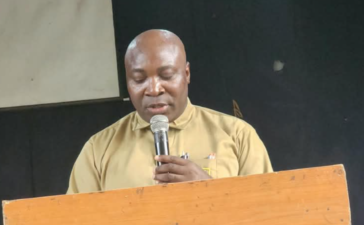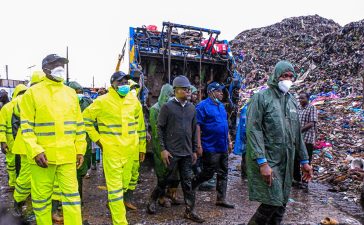
The Managing Director and Chief Executive Officer of the Lagos Waste Management Authority (LAWMA), Muyiwa Gbadegesin, has announced that the agency’s long-term vision is to transition Lagos into a zero-waste economy focused on reducing waste generation while maximising recycling, reuse and resource recovery.
Gbadegesin made the statement in a release issued on Friday by the Director of Public Affairs at LAWMA, Mukaila Sanusi.
According to him, Lagos State has operated a rolling waste management framework since the administration of former Governor Babatunde Fashola, which has guided reforms and improvements in the sector over the years.
He explained that the evolving demands of a rapidly growing megacity now require an updated and more comprehensive waste management strategy.
“The long-term goal is to transition Lagos towards a zero-waste economy, where waste generation would be minimised while maximising resource recovery, recycling and reuse,” Gbadegesin said.
He noted that population growth, urban expansion and changing consumption patterns have significantly increased pressure on existing waste management systems, making a review of the current master plan necessary.
“What we are doing is building on an existing foundation. The waste management system in Lagos has evolved over time, and the current effort is to update the framework to reflect new realities and position the state for the future,” he added.
Gbadegesin stated that the updated Waste Management Master Plan would provide a 10 to 15-year roadmap for infrastructure planning, investment and system upgrades across the state.
He identified key focus areas to include landfill optimisation, material recovery facilities, waste-to-energy systems, biogas production, and the deployment of mechanical street sweepers.
He also highlighted plans to expand public-private partnerships through Private Sector Participation (PSP) operators as part of efforts to strengthen service delivery.
According to him, the new framework will also promote local manufacturing and assembly of waste management equipment such as compactor trucks and tricycles, helping to create jobs within the environmental sector.
Gbadegesin emphasised that the transition to a zero-waste system would not only improve environmental sustainability but also unlock economic opportunities within the waste value chain.
He reaffirmed LAWMA’s commitment to continuous reform and collaboration with stakeholders, including development partners and private sector operators, to build a more resilient waste management system for Lagos.
The initiative aligns with broader efforts to modernise urban infrastructure and address the environmental challenges associated with rapid urbanisation in one of Africa’s largest cities.