A new coalition of opposition parties and civil society organisations in Togo has relaunched protests against controversial constitutional reforms that critics say could allow President Faure Gnassingbé to remain in power indefinitely.
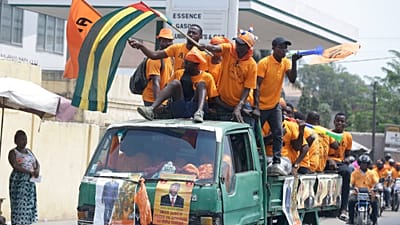
The coalition, known as the National Consultation Framework for Change in Togo (CNCC), held its first public meeting on Saturday in the capital, Lome, drawing several hundred supporters.
The gathering marked one of the rare public opposition meetings held in Togo in recent years, with the previous major rally taking place more than a year ago.
The coalition brings together four opposition political parties alongside civil society organisations seeking to challenge the country’s 2024 constitutional reforms.
Speaking at the event, David Dosseh, spokesperson for the Citizens’ Front Togo Standing (FCTD), said the mobilisation was intended to show that citizens still reject the constitutional changes.
“It was important for the Togolese people to show that they are still standing and that they do not accept the abuse of the new constitution,” Dosseh said.
“We are entering a new phase of mobilisation,” he added.
Several opposition leaders addressed the gathering, including Jean-Pierre Fabre, president of the National Alliance for Change (ANC).
Fabre criticised the recent detention of Togolese poet and activist Honore Sitsope Sokpor, popularly known as Affectio.
Sokpor was reportedly jailed again on Monday only months after being released under judicial supervision.
Fabre described the arrest as “arbitrary detention” and condemned what he called relentless harassment of opposition voices.
Other speakers at the meeting also criticised the government over alleged poor governance and democratic backsliding.
Opposition groups and civil society organisations have consistently opposed the 2024 constitution, arguing that it was designed to enable Gnassingbé, who has been in power since 2005, to extend his hold on leadership indefinitely.
However, supporters of the government insist that the constitutional reforms are intended to improve political representation within the country.
The reforms abolished the direct election of the head of state by universal suffrage and introduced a parliamentary system in which the most powerful office is now the president of the council.
That position is currently occupied by Faure Gnassingbé.
Last year’s protests against the constitutional changes reportedly left seven people dead, according to civil society organisations.
The latest mobilisation signals renewed political tension in the West African nation as opposition groups intensify pressure against the reforms and demand democratic accountability.