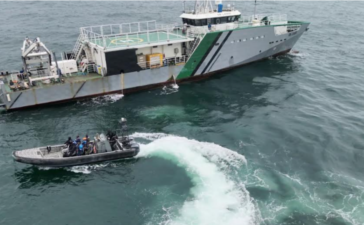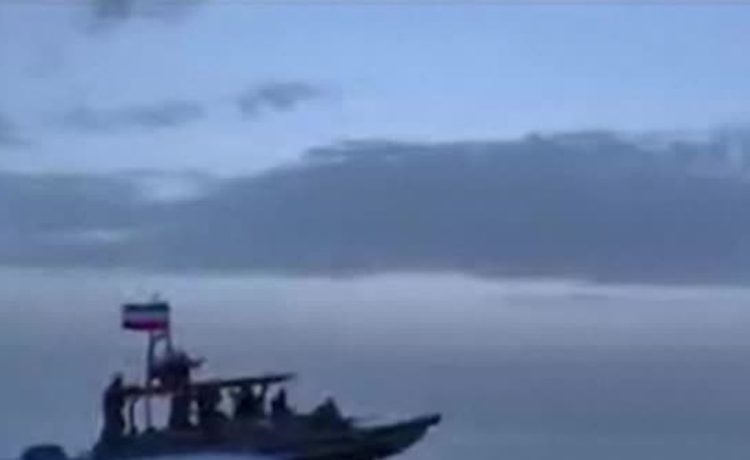
Iran’s reported use of fast-attack boats to seize two container ships near the Strait of Hormuz has raised fresh concerns over maritime security and the stability of one of the world’s most critical oil transit routes.
The incident, according to maritime security sources, highlights how asymmetric naval tactics continue to challenge assumptions about the extent of Iran’s degraded military capabilities.
US President Donald Trump said on Monday that while Iran’s conventional navy had been “largely destroyed,” its fast-attack vessels had not been fully neutralised.
He warned that any such boats approaching a US blockade would be “immediately ELIMINATED,” referencing past US military operations targeting suspected drug-smuggling vessels in the Caribbean and Pacific.
However, security analysts say Iran’s small boat fleet presents a different and more complex challenge compared to lightly armed maritime targets elsewhere.
According to Greek maritime security firm Diaplous Group, Iran’s fast boats are part of a broader “layered system of threats” that includes shore-based missiles, drones, naval mines and electronic interference.
The firm warned that these capabilities are designed to create confusion and slow down decision-making in the event of naval engagement.
Iran’s Islamic Revolutionary Guard Corps reportedly operates hundreds, and possibly thousands, of small fast-attack boats, many of which are believed to be hidden in coastal tunnels, naval bases or blended into civilian maritime traffic.
Maritime security specialists estimate that a significant portion of these vessels were destroyed during recent military confrontations, including the ongoing conflict that escalated in early 2026.
Chief executive of maritime risk consultancy Corey Ranslem said more than 100 such boats may have been lost since hostilities began.
Despite those losses, experts caution that Iran’s remaining fleet still poses a credible threat to commercial shipping.
The Strait of Hormuz, a narrow maritime corridor linking the Persian Gulf to global shipping routes, remains one of the most strategically sensitive chokepoints for global energy supplies.
Security analysts note that even limited disruptions in the area can have immediate effects on global oil prices and supply chains.
Iranian naval doctrine has long relied on asymmetric warfare strategies, using speedboats equipped with machine guns, rocket launchers and in some cases anti-ship missiles to offset the superiority of larger naval forces.
The recent incidents underscore the continuing risks to commercial vessels operating in or near the region, despite claims of degraded Iranian naval capability.
Analysts say that reopening and securing uninterrupted passage through the Strait of Hormuz will require sustained naval presence, improved surveillance and coordinated international maritime security efforts.
As tensions persist, the situation continues to highlight the fragility of global energy supply routes passing through the region.