Egyptian authorities have unveiled a rare plaster blocking wall from the tomb of King Tutankhamun’s Tomb Blocking Wall in Luxor, alongside two newly restored ancient tombs on the West Bank of the city dating back to the New Kingdom period.
Officials displayed the artifact at the Luxor Museum, describing it as a unique piece in archaeological history. The wall is linked to the burial chamber of Tutankhamun, whose tomb was discovered in 1922 by British archaeologist Howard Carter.
According to Abdelghaffar Wagdy, director-general of Luxor Antiquities, the plaster blocking wall is a one-of-a-kind artifact that has never been replicated in Egypt or anywhere else in the world due to widespread looting of Pharaonic tombs over centuries.
He said the reconstructed wall is the only surviving element of Tutankhamun’s tomb that has not been previously seen by the public.
The Egyptian Ministry of Tourism and Antiquities stated that the wall was originally used to seal entrances to the king’s burial chamber and bears official seals linked to funerary rituals and royal administrative authority.
It also contains impressions belonging to Tutankhamun as well as seals from necropolis guards responsible for protecting royal burial sites.
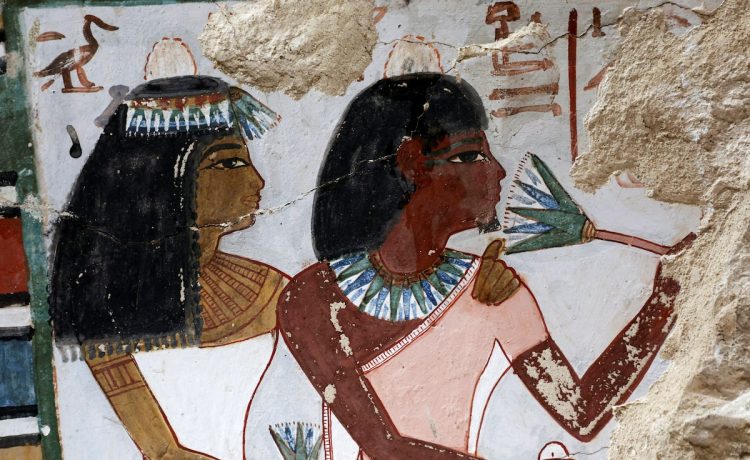
In addition to the exhibition, authorities opened two restored tombs belonging to Rabuya and his son Samut from the 18th Dynasty of the New Kingdom.
The tombs, located on the West Bank of the Nile in Luxor, were discovered accidentally in 2015 and have now been restored for public viewing.
Officials said the tombs contain detailed scenes depicting daily life in ancient Egypt, including agriculture, harvest activities, crafts, bread-making, pottery production, and wine production.
Hisham El-Leithy, secretary-general of Egypt’s Supreme Council of Antiquities, said the newly opened sites represent significant archaeological discoveries that provide deeper insight into ancient Egyptian civilisation.
The West Bank of Luxor is home to the famous Valley of the Kings, where many New Kingdom pharaohs, including Tutankhamun, were buried in rock-cut tombs filled with treasures and funerary artefacts.
The latest exhibition adds to Egypt’s ongoing efforts to preserve and showcase its ancient heritage while promoting cultural tourism.