

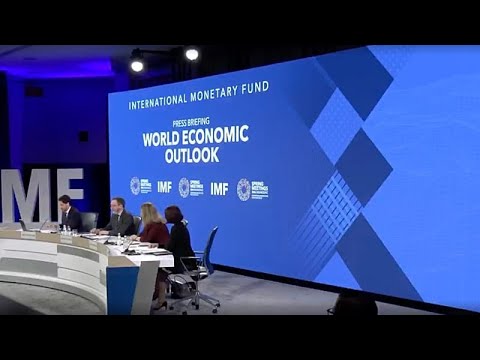
Sub-Saharan Africa entered 2026 with its strongest economic momentum in more than a decade before a new global shock disrupted the outlook, according to the International Monetary Fund (IMF).
Presenting the Regional Economic Outlook at the IMF Spring Meetings, Director of the African Department Abebe Aemro Selassie said the region had recorded significant gains in 2025, only to face renewed pressure from external shocks.
“Sub-Saharan Africa entered 2026 with the strongest economic momentum it had seen in a decade. And then came the war,” Selassie said, referring to the impact of conflict in the Middle East.
He added that policymakers now face the challenge of “holding the line” and preserving hard-won economic gains while absorbing fresh global disruptions.
According to the IMF report, regional growth reached 4.5 percent in 2025—the fastest in over ten years—driven by stronger global conditions and domestic reforms in several countries, including Ethiopia and Nigeria.
These reforms included exchange rate adjustments, subsidy reductions, and tighter monetary policies, which helped improve fiscal balances, reduce inflation, and strengthen investor confidence.
Inflation fell to a median of 3.4 percent by the end of 2025, while fiscal deficits narrowed and public debt levels eased across several economies.
However, the IMF warned that these gains are now under strain due to rising oil, gas, fertilizer, and shipping costs linked to geopolitical tensions.
The Fund has revised its 2026 regional growth forecast down to 4.3 percent, while inflation is expected to rise to around 5 percent.
Selassie noted that the impact will not be uniform, with oil-exporting countries potentially benefiting from higher prices, while oil-importing and low-income nations face worsening trade balances and higher living costs.
He also highlighted a sharp decline in official development assistance, warning that reduced aid flows are hitting vulnerable economies hardest, particularly in sectors such as healthcare and food security.
“What we are seeing now appears more structural,” he said, describing aid cuts as a growing long-term concern.
Despite the challenges, Selassie emphasized that African economies have demonstrated strong resilience in the face of repeated shocks.
He urged governments to protect vulnerable populations in the short term while strengthening fiscal buffers and domestic revenue systems over the longer term.
Among country examples, Selassie praised Ghana’s improving macroeconomic stability and growth outlook, while noting ongoing efforts to address debt transparency concerns in Senegal in collaboration with the IMF.
He stressed that sustaining reform momentum will be critical for long-term stability and development across the region.
“The potential there is tremendous,” he added.



