As contemporary African art continues to gain international recognition, a new generation of artists is using the visual medium to explore the complexities of identity, emotion, culture, and social consciousness.
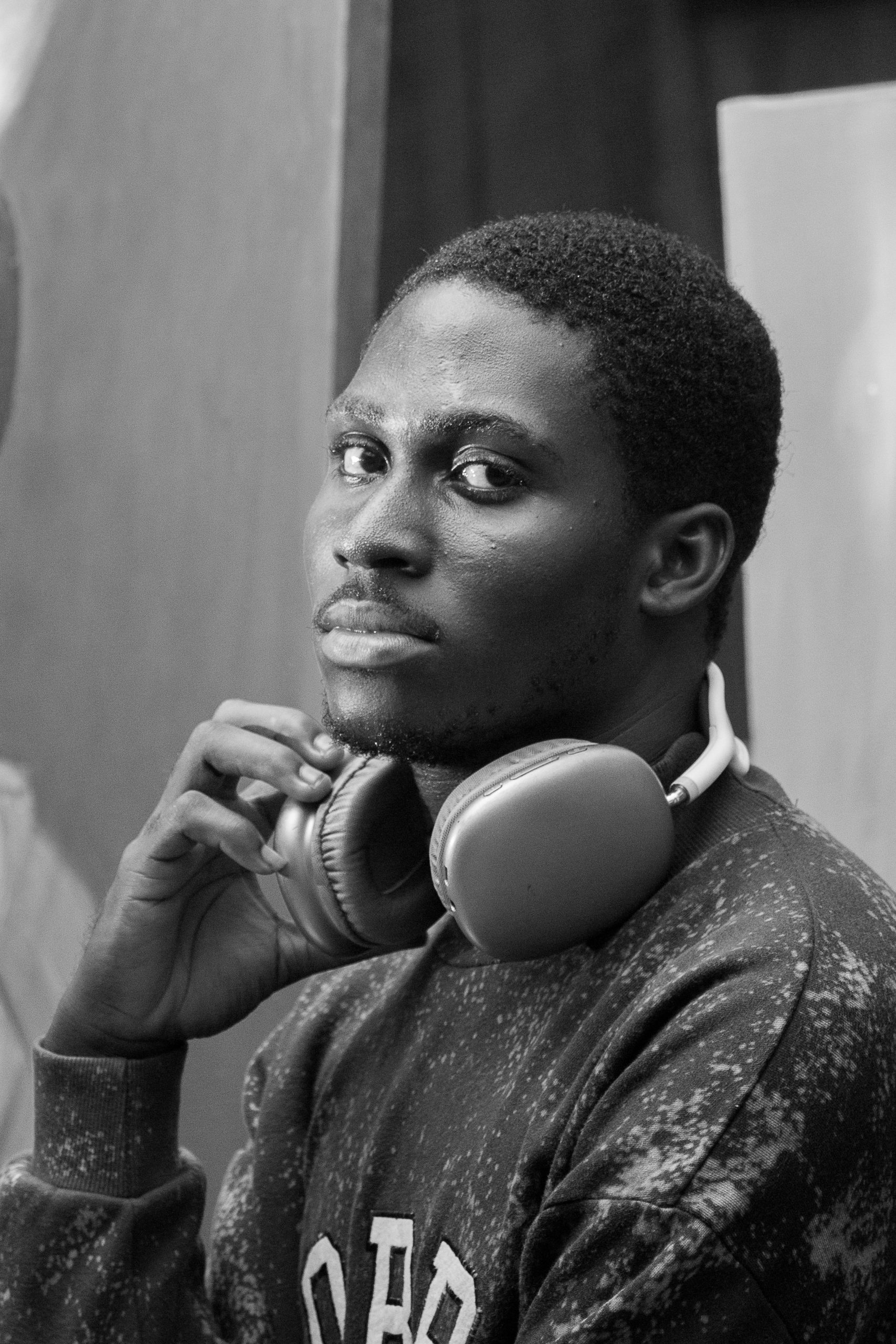
Among them is Kingsley Oghenekaro, a self-taught conceptual artist whose multidisciplinary practice combines figuration, abstraction, and mixed media to create works that invite reflection and dialogue.
For Kingsley, art is more than aesthetic expression—it is a tool for exploring the shared human experience. Drawing inspiration from memory, lived realities, emotional awareness, and collective identity, his works challenge viewers to engage with questions of personal growth, cultural heritage, ethical responsibility, and self-discovery.
Through richly textured surfaces and narrative-driven compositions, he creates spaces where audiences can connect with both their own stories and broader societal concerns.
As one of the participating artists in the forthcoming Here & Now: Becoming, Identity, Memory, and Environment exhibition at Thought Pyramid Art Centre, Lagos, Kingsley presents works that examine personal agency, cultural consciousness, and the ongoing process of becoming.
In this exclusive conversation with African Voices 1 Network, he reflects on the evolution of his artistic practice, the role of contemporary art in shaping public discourse, and how his work responds to the themes of presence, identity, and transformation at the heart of the exhibition.
AV1: Your work explores human emotion, social consciousness, and collective identity. What inspired this focus?
Kingsley: Many people go through life without consciously paying attention to certain aspects of life that greatly influence who they become, things like emotional awareness, personal choices, lived experiences, and identity. These are themes that affect us all, regardless of our background. Through my work, I aim to shed light on these areas, creating spaces where people feel seen, understood, and connected. Ultimately, I hope my art inspires reflection, hope, and positive emotional growth.
AV1: As a self-taught conceptual artist, how did you develop your artistic language?
Kingsley: My journey began with charcoal portraiture and creating whatever felt exciting and fulfilling at the time. However, through consistent practice, experimentation, and intentionality, my approach evolved. Over time, I became less interested in simply creating images and more interested in creating meaningful experiences through art.
I began to see art as a voice, one that can speak to people across cultures, beliefs, and backgrounds. I believe that despite our differences, we are all connected by shared human experiences, emotions, and desires. That belief continues to shape the language of my work today.
AV1: Your work combines abstraction, figuration, and mixed media. What attracts you to this multidisciplinary approach?
Kingsley: I’ve always been a curious artist. Throughout my artistic growth, I’ve enjoyed exploring different materials, techniques, and styles. While experimenting, I discovered that figurative expression resonates deeply with me because it allows viewers to immediately connect with the human experience, even if they have little knowledge of art.
The incorporation of abstraction, texture, and mixed media gives me additional freedom to communicate emotions, atmosphere, and meaning in ways that are not always literal. It allows me to create works that are both personal and open to interpretation.
AV1: How do memory and lived experience influence your compositions?
Kingsley: As human beings, we are constantly shaped by our experiences, environment, relationships, and society. Naturally, these influences find their way into my work. Many of my ideas emerge from personal observations, lived experiences, and moments that leave a lasting emotional impression. These experiences often become starting points for exploring broader themes that others can also relate to.
AV1: What role does texture play in communicating meaning within your work?
Kingsley: Texture has become an important part of my artistic practice because it adds a physical and emotional presence to my paintings. I want viewers to feel the intensity, authenticity, and life within the work. Texture helps communicate emotion beyond imagery alone, creating surfaces that feel lived-in, layered, and expressive while reinforcing the meaning behind each piece.
AV1: Your paintings often invite reflection on ethical and social issues. Why is this important to you?
Kingsley: I believe that growth(both personal and collective) begins with reflection. As individuals, we have a responsibility to continually strive to become better versions of ourselves. Many of the challenges we face as a society stem from choices, attitudes, and systems that affect how we live together.
Through my work, I hope to encourage conversations around these realities. Art may not provide all the answers, but it can create opportunities for awareness, empathy, and meaningful dialogue that contribute to positive change.
AV1: How do you balance conceptual inquiry with emotional expression?
Kingsley: For me, concept and emotion work hand in hand. A strong concept gives a painting direction and purpose, while emotion gives it life and human connection. I often begin with an idea or question I want to explore, but I make sure the emotional experience remains present because that is usually what draws people into the work and allows them to connect with it on a personal level.
AV1: The exhibition is titled “Here & Now.” How does your work respond to its themes?
Kingsley: “Here & Now” speaks to the present moment, but I believe the present is shaped by both where we come from and where we are headed. The three works I am exhibiting explore different aspects of that reality.
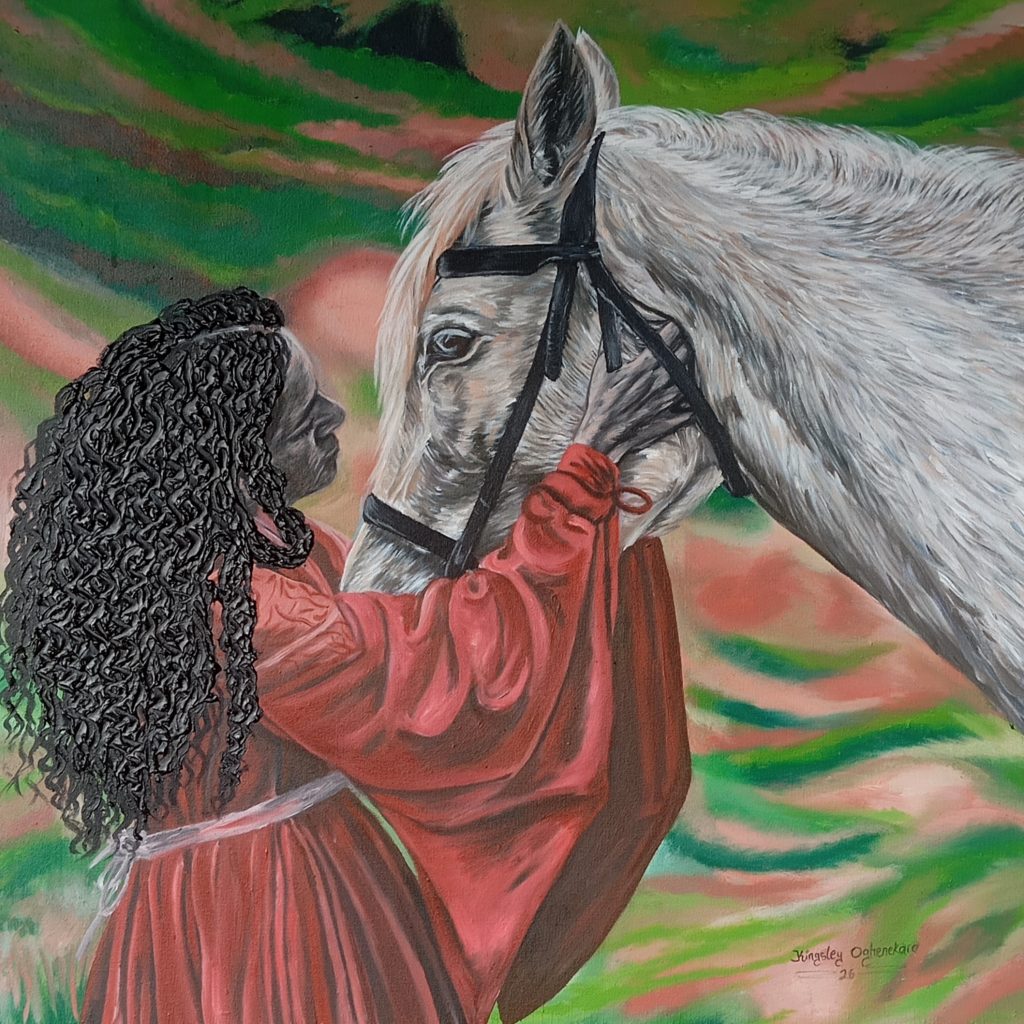
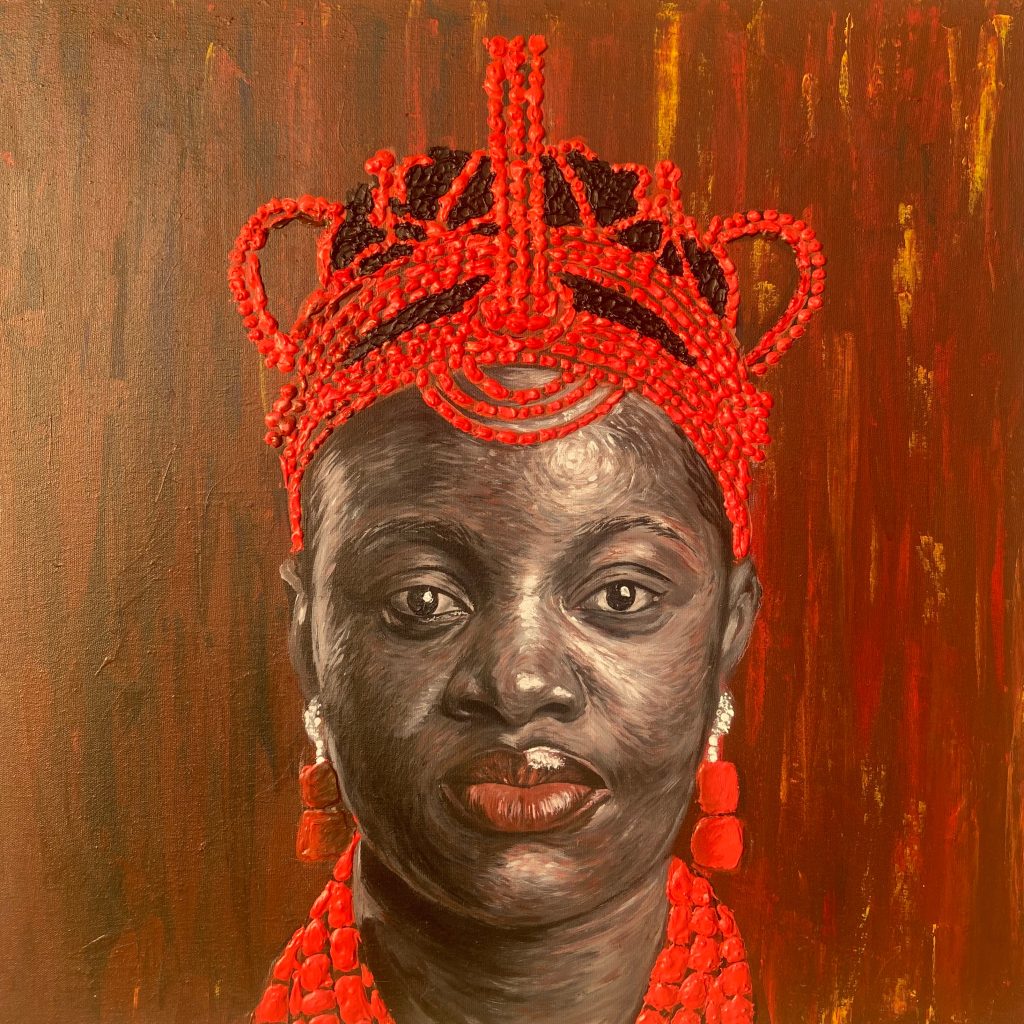
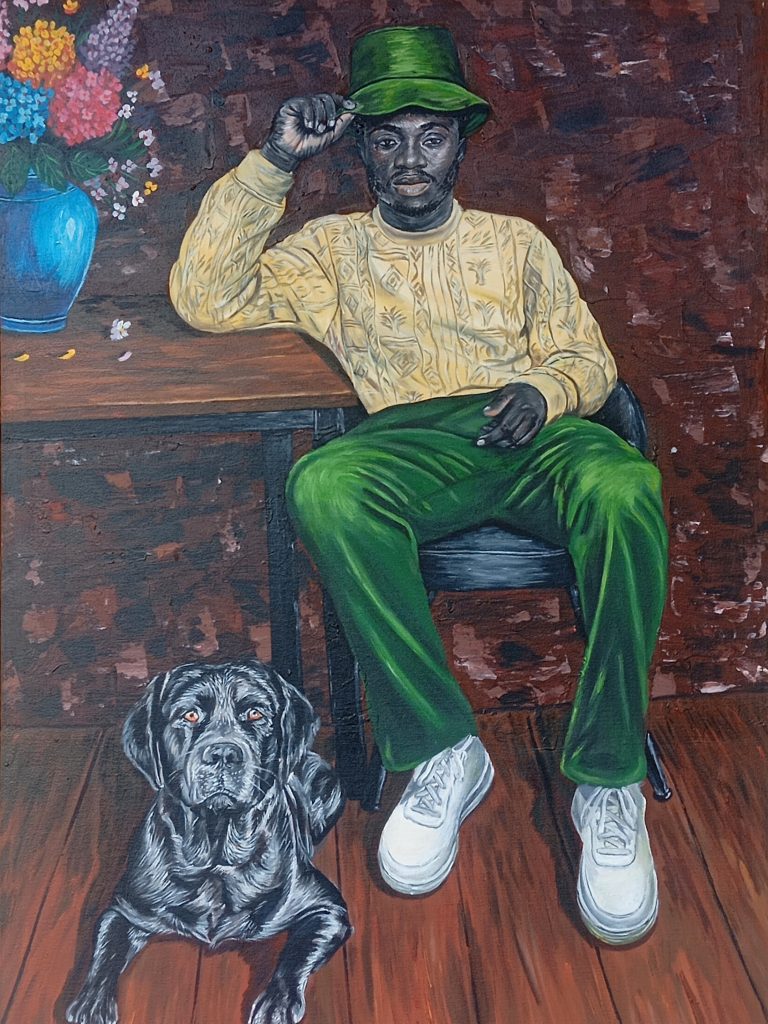
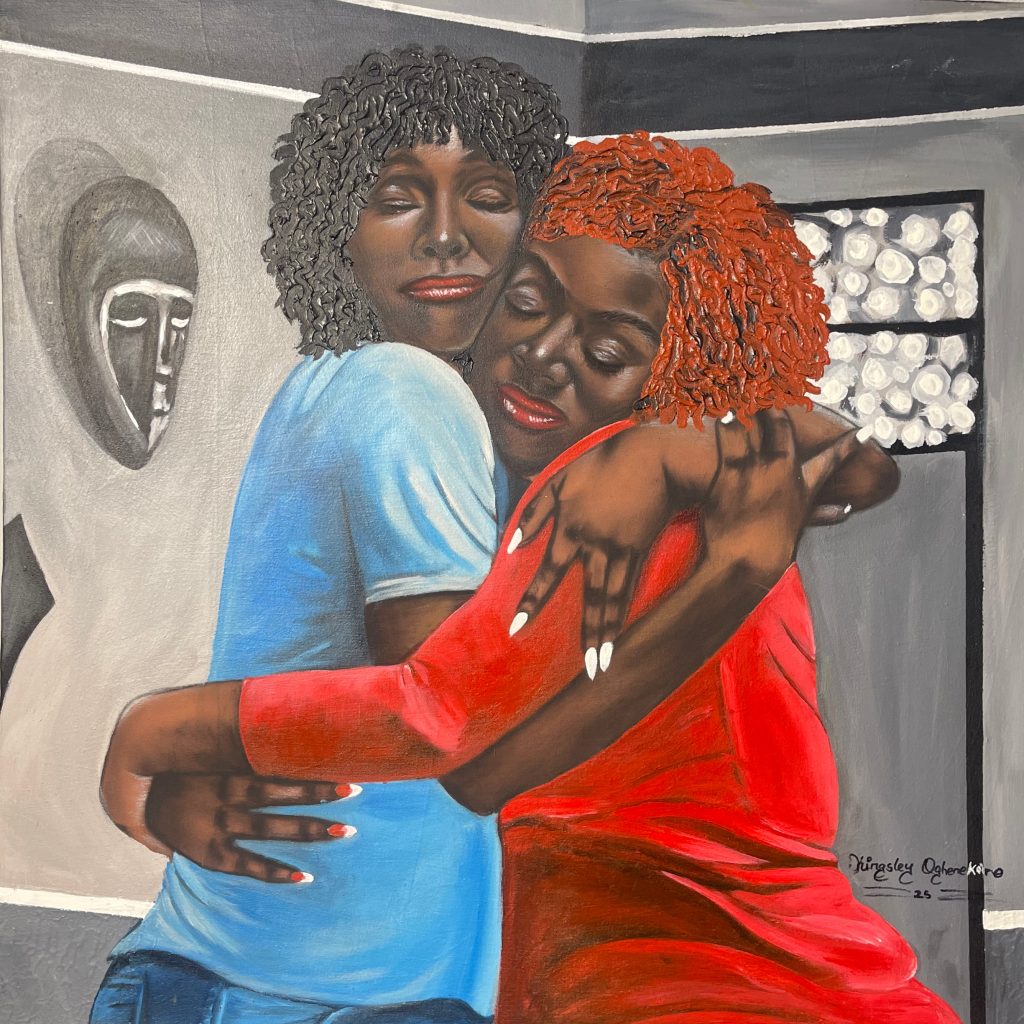
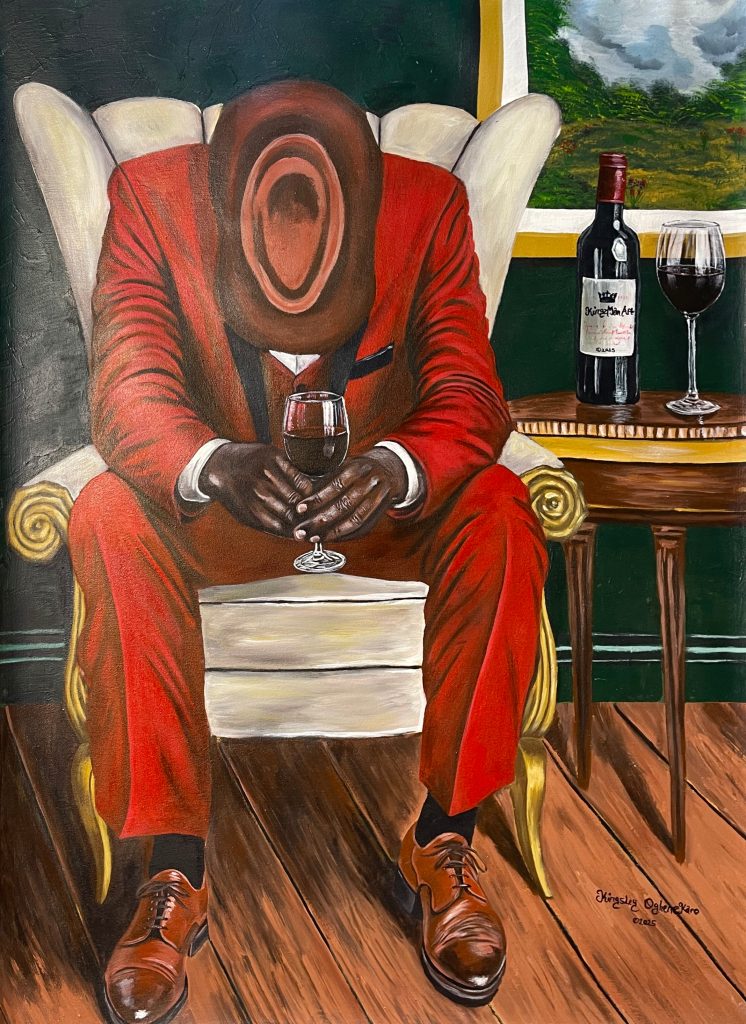
My Life, My Choice reflects personal agency and the power of individual decisions. Still Becoming explores growth, identity, and the continuous process of self-discovery. Itohan of Benin celebrates cultural heritage and the enduring influence of identity across generations.
Together, these works examine what it means to exist in the present while carrying our histories, making choices that define us, and continually evolving into who we are becoming.
AV1: What social issues most influence your creative practice?
Kingsley: I am particularly influenced by issues surrounding identity, emotional well-being, cultural consciousness, personal freedom, and the ways societal expectations shape individual lives. I am interested in how people navigate these realities while trying to remain true to themselves.
AV1: How do audiences typically respond to the open-ended nature of your work?
Kingsley: One of the most rewarding aspects of exhibiting my work is seeing how differently people interpret it. Viewers often bring their own experiences, memories, and perspectives into the conversation. The open-ended nature of my work encourages reflection and allows individuals to find meanings that are personal and unique to them.
AV1: What role should contemporary art play in shaping public discourse?
Kingsley: Contemporary art should create space for dialogue, reflection, and critical thinking. It has the power to raise awareness, challenge assumptions, and encourage empathy. In a rapidly changing world, art can help people engage with important issues while offering new ways of understanding themselves and others.
AV1: How has your practice evolved over the years?
Kingsley: My practice has evolved significantly from creating charcoal portraits to developing a more concept driven and narrative based body of work. While technical growth has been important, the biggest transformation has been my shift toward storytelling, symbolism, and creating work that invites deeper emotional and intellectual engagement.
AV1: What challenges have you faced as a conceptual artist in Nigeria?
Kingsley: One challenge has been navigating environments where visual appeal is sometimes valued more immediately than conceptual depth. There can also be limitations in resources, exposure, and opportunities for experimentation. However, these challenges have pushed me to remain authentic, continue learning, and develop a voice that is both personally meaningful and culturally relevant.
AV1: What do you hope viewers question or reconsider after engaging with your work?
Kingsley: I hope viewers take a moment to reflect on their own experiences, choices, identities, and relationships with others. If my work encourages someone to see themselves, their culture, or society from a different perspective, then I believe it has fulfilled its purpose.
AV1: What new ideas or experiments are you currently exploring?
Kingsley: I am currently exploring deeper forms of storytelling through painting, particularly the relationship between personal identity, cultural memory, and emotional experience. I am interested in creating more narrative-driven works that combine symbolism, atmosphere, and figurative representation while continuing to expand the emotional and conceptual depth of my practice.