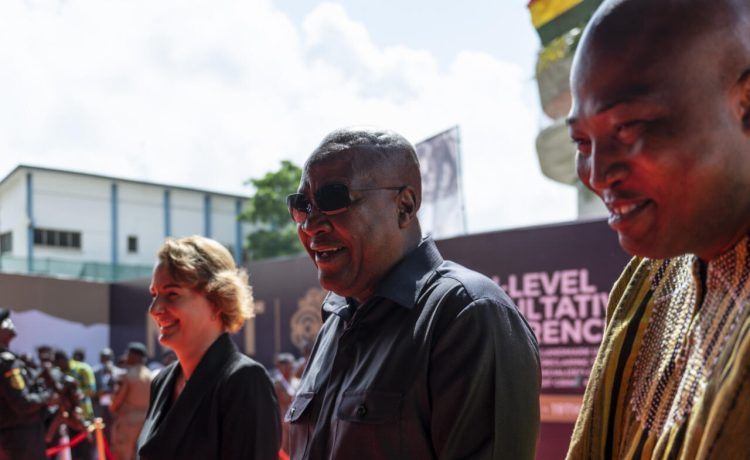
Ghana has hosted a landmark global conference aimed at turning growing international support for slavery reparations into concrete commitments toward justice and restitution.
The conference, held on Thursday, brought together leaders from across Africa and the Caribbean following a historic United Nations resolution that described the transatlantic slave trade as “the gravest crime against humanity.”
Since the adoption of the non-binding resolution in March, campaigners say momentum for reparatory justice has significantly increased, with Ghana positioning itself at the centre of the global push.
Ghana’s Foreign Minister, Samuel Ablakwa, said the development reflects “unprecedented momentum” in efforts to secure justice for historical injustices.
The UN resolution, supported by 123 member states, goes beyond recognition of slavery and calls on countries linked to the trade to engage in restitution and compensation discussions.
“We won the battle against slavery, we won the battle against colonialism, we won the battle against apartheid, and we are confident that we shall win the battle against reparatory injustice,” Ablakwa told delegates.
Ghanaian President John Mahama, who championed the resolution, said the challenge now is to turn recognition into meaningful action rather than symbolic gestures.
The Accra conference featured participation from heads of state including leaders from Barbados, Sierra Leone, Senegal, Namibia and Liberia, as well as Nigerian Nobel laureate Wole Soyinka.
French President Emmanuel Macron addressed the gathering virtually, endorsing symbolic steps such as the repeal of royal decrees tied to slavery-era governance in French colonies, while cautioning against reducing reparations to “a merely financial logic.”
France, along with Britain and Portugal, was among the largest European slave-trading powers during the transatlantic slave era.
Pope Leo XIV also recently issued an apology for the Catholic Church’s delayed condemnation of slavery, describing it as “a wound in Christian memory.”
Mahama announced the formation of three working panels to advance the reparations agenda, including an advisory group of heads of state, a panel of experts focused on restitution, and a legal committee to examine implementation pathways.
He said the issue is not whether history can be changed, but whether the world has the courage to confront it honestly and act meaningfully on its legacy.
Wole Soyinka stressed that reparations must go beyond symbolic gestures, calling for a deeper reckoning with historical and present-day injustices.
“It is not merely about apology or compensation — it is about the rehumanisation of memory,” he said, while also warning against ignoring contemporary human rights failures on the continent.
Participants at the conference said reparations could include structured compensation funds, debt relief or restructuring, and the return of cultural artefacts taken during colonial rule.
The gathering marks a renewed push by African nations to shift reparations from moral debate into structured international policy discussions.