The Democratic Republic of Congo (DRC) has announced the creation of a new paramilitary unit aimed at securing its vast and strategically important mining sector, marking a major step in efforts to tighten control over the country’s mineral wealth.
The initiative, announced Monday by the General Inspectorate of Mines (IGM), establishes a force known as the “Mining Guard,” designed to protect extraction sites and mineral transportation routes across the country.
The DRC is one of the world’s most resource-rich nations, producing around 70% of global cobalt output — a critical component in electric vehicle batteries and defence technologies — alongside significant reserves of copper, coltan, and lithium.
The IGM described the new unit as a “paramilitary special force intended to secure the entire mineral exploitation chain,” reflecting growing concerns over illegal mining, fraud, and insecurity in key mining regions.
The plan includes funding of approximately $100 million and is linked to what authorities describe as strategic partnerships involving the United States and the United Arab Emirates, though officials did not provide further details on financing arrangements.
The move comes amid intense global competition for critical minerals, with Chinese companies currently dominating much of the DRC’s mining sector, while firms from the United States and other countries maintain a growing presence.
The government also highlighted ongoing geopolitical developments in the region, including a recent agreement between the DRC and Rwanda aimed at reducing conflict in the eastern part of the country. That region has long been unstable, with violence escalating due to armed groups such as the Rwanda-backed M23 rebel movement.
The agreement includes economic provisions designed to support access for American technology companies to strategic mineral supplies, underscoring the global significance of the DRC’s resources.
According to the IGM, the Mining Guard will be responsible not only for securing mining sites but also for safeguarding transport routes used to move minerals across the country.
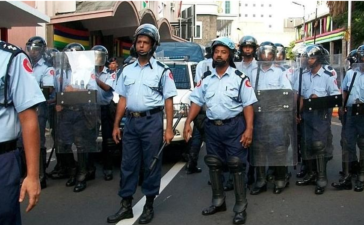
The government plans to deploy more than 20,000 personnel across 22 mining provinces by the end of 2028. Recruitment and training are expected to begin soon, with the first batch of guards scheduled for deployment in December 2026 after a six-month training programme.
Officials say the initiative is aimed at improving oversight, reducing illegal exploitation, and ensuring that mineral revenues contribute more effectively to national development.
However, the creation of a heavily armed mining security force is likely to draw scrutiny given the DRC’s history of conflict in resource-rich regions and the sensitive balance of power among foreign investors and local stakeholders.
The Mining Guard marks one of the most ambitious state-led efforts yet to assert control over the country’s mineral supply chain, at a time when global demand for critical raw materials continues to surge.