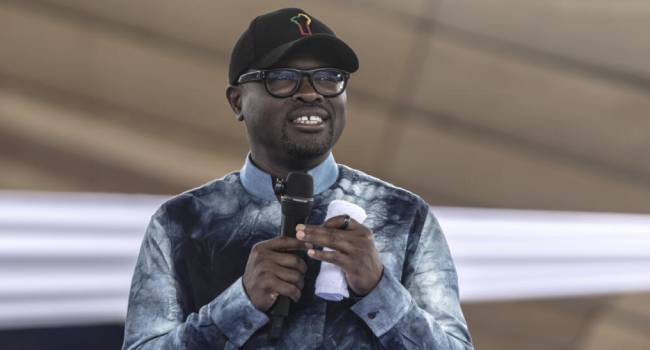
Benin President Romuald Wadagni visited Niger on Tuesday, becoming the first Beninese head of state to travel to Niamey since the 2023 military coup that strained relations between the neighboring countries.
The visit is widely seen as a sign of improving ties between Benin and Niger after a prolonged period of diplomatic tension. Following the coup, Niger’s military rulers severed ties with France and closed the border with Benin, accusing the country of hosting French military bases that could be used to destabilize Niger. Benin and France repeatedly denied the allegations.
Niger’s junta leader, General Abdourahamane Tiani, personally welcomed President Wadagni upon his arrival in Niamey. State broadcaster Tele Sahel carried live coverage of the meeting between the two leaders.
A key focus of the discussions was expected to be the revival of security cooperation. Both countries continue to face growing threats from jihadist groups operating across the region.
Niger has strengthened its alliance with fellow military-led governments in Burkina Faso and Mali through the Alliance of Sahel States (AES). The three nations have also withdrawn from the Economic Community of West African States (ECOWAS), accusing the regional bloc of serving Western interests and failing to support their fight against insurgency.
In a statement, the Beninese presidency described the visit as part of President Wadagni’s commitment to active neighborhood diplomacy with all countries bordering Benin.
The trip to Niger came just one day after Wadagni’s first international visit to Nigeria. He was also expected to continue his regional tour with a visit to Burkina Faso later on Tuesday.
Signs of improving relations had already emerged when Niger’s Prime Minister, Ali Lamine Zeine, attended Wadagni’s inauguration in Cotonou. During the ceremony, Zeine spoke of opening “a new path” in relations between the two countries.
Residents in Niamey witnessed a festive atmosphere as major roads were decorated with the flags of both nations. Hundreds of Beninese nationals living in Niger gathered to welcome the presidential convoy.
Wadagni, the former finance minister and political successor to former President Patrice Talon, won Benin’s presidential election with 94 percent of the vote.
Shortly after the election, Niger’s Interior Minister Mohamed Toumba expressed hope that the new administration would distance itself from France. He said Niger was looking for goodwill gestures and assurances that Benin was not supporting French interests in the region.
Political analyst Odilon Koukoubou said the leadership change in Benin created an opportunity to ease tensions with the AES countries.
According to Koukoubou, relations between the military-led governments and former President Talon had become particularly strained, making Wadagni’s election an important opening for renewed dialogue.
Beyond politics and security, both countries share strong economic interests. The Port of Seme-Kpodji in Cotonou has traditionally served as Niger’s main trade gateway, handling around 80 percent of the country’s freight before the diplomatic dispute.
While a major oil pipeline transporting Nigerien crude through Benin remains operational, the only bridge connecting the two countries across the Niger River remains closed and heavily secured, according to local residents.
Observers say President Wadagni’s visit could pave the way for deeper cooperation, improved border relations, and renewed economic activity between the two neighboring nations.