
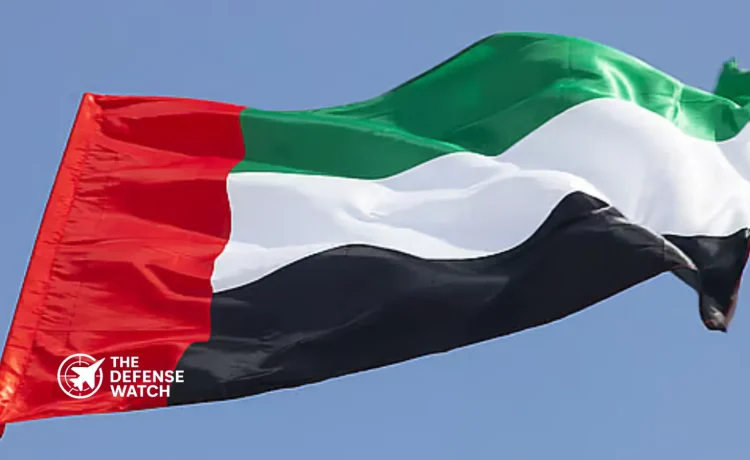
Trade between the United Arab Emirates (UAE) and West Africa increased by 40.3 per cent to $61.3 billion between January and September 2026, reflecting growing commercial relations between the Gulf nation and countries across the West African region.
The figures were disclosed by the UAE Minister of Foreign Trade, Dr Thani bin Ahmed Al Zeyoudi, during the West Africa Integration and Investment Summit held in Sierra Leone on November 17 and 18.
According to the minister, the latest nine-month trade figure is almost equivalent to the $62.1 billion recorded throughout the whole of 2025.
The development highlights the increasing importance of West Africa as a trading partner for the UAE and reflects opportunities created by the region’s growing population, natural resources and investment potential.
The summit was held at the Julius Maada Bio International Conference Centre in Lungi, Sierra Leone, and brought together government officials, investors, development finance institutions and private-sector representatives.
Sierra Leone’s President, Julius Maada Bio, inaugurated the summit, which focused on strengthening regional economic integration and attracting investment into strategic sectors.
Al Zeyoudi participated in the event on behalf of UAE President Sheikh Mohamed bin Zayed Al Nahyan.
During his address, the minister described West Africa as an important economic partner with significant opportunities for long-term commercial cooperation.
He also highlighted the region’s population of more than 450 million people, economic growth of 4.7 per cent and investment project portfolio valued at more than $180 billion.
These factors, according to the UAE official, create opportunities for businesses seeking to expand into emerging markets and establish partnerships across Africa.
Four major investment sectors identified
The UAE identified energy, industry and mineral resources, food security and regional connectivity as four major areas offering investment opportunities across West Africa.
The energy sector remains particularly important because several countries in the region are seeking investment to improve electricity generation, expand renewable energy capacity and strengthen energy infrastructure.
West Africa also possesses substantial natural resources, including gold, bauxite, iron ore, oil and gas.
Investment in mining and mineral processing could support industrial development while creating opportunities for local employment and exports.
Agriculture and food security were also highlighted as important areas for cooperation.
Many West African economies depend heavily on agriculture, but challenges involving financing, storage, transportation and processing continue to limit productivity.
Investment in modern agricultural equipment, food processing facilities and supply-chain infrastructure could improve production and strengthen food security.
Regional connectivity is another important priority because inadequate transport and logistics infrastructure increases the cost of moving goods across African markets.
The development of roads, ports, railways and digital infrastructure could improve trade efficiency and support the implementation of the African Continental Free Trade Area.
UAE investment in Africa
The UAE has continued expanding its economic involvement across Africa through investments and commitments in different sectors.
According to figures presented at the summit, the country invested or made investment commitments exceeding $118 billion across Africa between 2020 and 2024.
The investments cover energy, logistics, infrastructure, food systems and the digital economy.
West African countries account for more than 6.1 per cent of the UAE’s total non-oil foreign trade and approximately 40 per cent of its non-oil trade with Africa.
Sierra Leone is also benefiting from the growing relationship.
Non-oil trade between the UAE and Sierra Leone reached $152.3 million in 2025, while transactions amounted to $113.4 million between January and October 2026.
The UAE-Sierra Leone Comprehensive Economic Partnership Agreement, signed in February 2026, is another development expected to strengthen commercial relations between the two countries.
Moving from trade agreements to actual projects
Despite the encouraging trade figures, the UAE minister stressed the importance of converting investment discussions into practical projects.
This is important because African countries have frequently announced major investment opportunities without achieving the expected level of implementation.
The summit therefore included an investment deals platform designed to connect projects with investors, financial institutions and development partners.
The platform focused on identifying opportunities and encouraging financing arrangements that could translate commitments into actual economic activities.
For West African countries, attracting investment is important for improving infrastructure, expanding industrial capacity and creating employment.
However, governments must also ensure that investment agreements produce measurable economic benefits and contribute to sustainable development.
The latest figures suggest that commercial relations between the UAE and West Africa are expanding rapidly.
Maintaining this momentum will depend on stronger partnerships, transparent investment policies and the ability of governments to create an environment where businesses can operate successfully.