South African authorities have launched investigations following two separate mass shootings that left at least 17 people dead in different locations over the weekend.
The attacks, which occurred approximately 530 kilometres apart, have renewed concerns about violent crime and the growing threat posed by organised criminal activities in the country.
According to the Associated Press, eight people were found dead inside a bullet-riddled vehicle in Sweetwaters, near Pietermaritzburg.
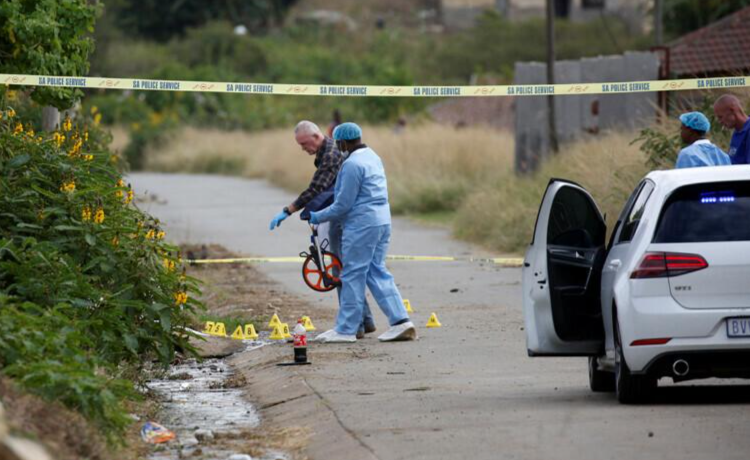
In another incident near Pretoria, nine people were shot dead in a shack in Jeffsville.
The victims in the second incident included six men and three women.
Police have not identified suspects in the two attacks, and investigations are continuing to establish the motives and circumstances surrounding the killings.
The shootings have added to public concern about the country’s security situation and the ability of law enforcement agencies to prevent organised violence.
AP News
Details of the two shootings
The first attack occurred in Sweetwaters, near Pietermaritzburg, where police discovered eight people dead inside a vehicle that had been riddled with bullets.
Authorities have not yet established the identities of all the victims or determined the motive behind the incident.
The second attack took place in Jeffsville, near Pretoria, where nine people were killed inside a shack.
The victims included six men and three women.
Gauteng Police Commissioner Tommy Mthombeni said investigators were examining a possible connection between the Jeffsville incident and an earlier shooting in nearby Saulsville in 2025.
That previous attack left 12 people dead and 13 others injured.
According to the police commissioner, one of the victims in the latest Jeffsville shooting had been a person of interest in the earlier incident.
However, investigators have not established a definitive connection between the two attacks.
No arrests had been announced in connection with the two latest shootings at the time of the AP report.
Organised crime and illegal firearms
The shootings have renewed discussions about the influence of organised criminal groups and the circulation of illegal firearms in South Africa.
The country has experienced several mass shootings in recent years, with some incidents linked by investigators to criminal gangs and disputes over illegal mining territories.
Illegal firearms make it easier for criminal groups to carry out attacks and increase the risks faced by communities.
In some areas, residents have expressed concerns about their safety and the ability of police to respond effectively to violent incidents.
The latest shootings have therefore increased pressure on security agencies to strengthen investigations and improve intelligence gathering.
Authorities will also need to identify whether the incidents were connected to organised criminal activities or other disputes.
Impact on affected communities
Mass shootings have consequences beyond the immediate loss of life.
Families lose relatives, children may lose parents and entire communities can experience prolonged fear and insecurity.
Businesses operating in affected neighbourhoods may also face disruption when residents become afraid to travel or carry out normal commercial activities.
The incidents can weaken public confidence in law enforcement institutions, particularly when suspects remain unidentified.
Community leaders and residents are likely to demand stronger protection and faster investigations.
The government will also face pressure to demonstrate that security agencies are capable of addressing violent crime.
South Africa’s wider security challenge
South Africa has continued to deal with serious crime challenges involving murder, robbery, illegal firearms and organised criminal networks.
Addressing these problems requires more than increased police patrols.
Investigative capacity, intelligence sharing, stronger border controls and effective prosecution are also important.
Authorities must also address the social and economic conditions that allow criminal networks to recruit members and operate within communities.
Improving cooperation between police, local authorities and residents could help provide better information about criminal activities.
Outlook
The immediate priority for South African authorities is identifying those responsible for the two attacks and establishing the motives behind them.
The investigations will also be important in determining whether the incidents are connected to wider criminal networks.
For the affected families, accountability and justice remain essential.
The shootings have once again highlighted the need for stronger public safety measures and sustained action against violent crime in South Africa.