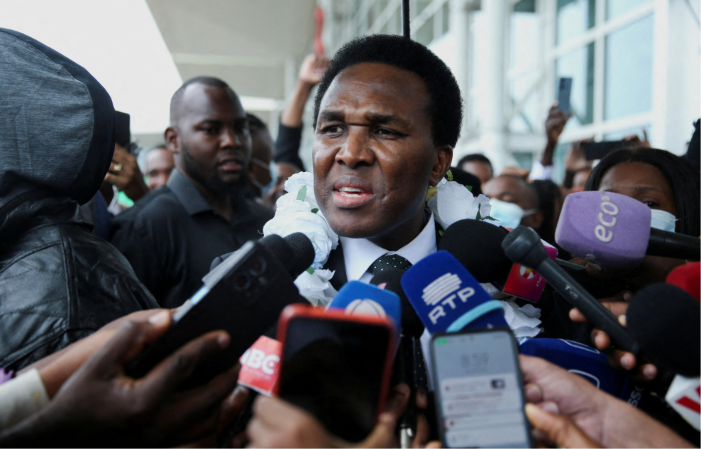
Mozambique’s main opposition leader, Venâncio Mondlane, has gone on trial over allegations of inciting terrorism and civil disobedience following the deadly protests that erupted after the country’s disputed 2024 general election.
The proceedings began on Tuesday, November 17, at the Supreme Court in Maputo, marking a significant development in the country’s ongoing political tensions.
Mondlane has denied the allegations, describing the legal proceedings as politically motivated. His trial has attracted considerable attention because of the role he played in challenging the outcome of the 2024 election and organising protests against the ruling political establishment.
The case comes nearly two years after Mozambique experienced one of its most serious periods of political unrest in recent history.
According to Reuters, more than 300 people were killed during the post-election demonstrations, based on figures from a civil society monitoring group. The protests were among the largest demonstrations against the ruling Frelimo party since Mozambique gained independence in 1975.
TimesLIVE
Background to the political crisis
Mozambique’s 2024 general election became a major source of political disagreement after the ruling Frelimo party was declared the winner.
Mondlane challenged the outcome, alleging electoral irregularities and demanding accountability over the results.
President Daniel Chapo and the ruling party rejected accusations of vote-rigging.
However, international observers raised concerns about the credibility of the election process, with Western observers saying the vote was not free and fair.
The disputed outcome triggered demonstrations across several parts of the country. Protesters demanded political reforms and questioned the legitimacy of the announced results.
The unrest created significant pressure on the government, while security forces faced criticism over their handling of demonstrations.
The crisis also affected businesses and economic activities in some areas as protests disrupted transportation, commercial operations and public services.
Mondlane emerged as a prominent opposition figure during the crisis, attracting support from people demanding political change.
His position has made the legal proceedings particularly sensitive for the country’s political environment.
Court proceedings and charges
The trial began under heavy security, with police officers and vehicles deployed along roads leading to the Supreme Court.
Dozens of Mondlane’s supporters gathered outside the court to demonstrate their support for the opposition leader.
The initial proceedings focused on procedural matters, including attempts by his lawyers to have the charges annulled.
However, the court rejected those arguments.
The court also prohibited live broadcasts of the proceedings, citing concerns about possible instability.
The trial is expected to continue for several months, according to Reuters.
Mondlane has maintained that he is confident in his legal defence and has rejected the accusations against him.
The charges include allegations of inciting terrorism and civil disobedience connected to the unrest following the election.
It is important to distinguish between the accusations brought against him and a final judicial determination. The proceedings are ongoing, and the opposition leader has not been convicted through this trial.
Political implications for Mozambique
The case could have significant implications for Mozambique’s democratic institutions and political competition.
Opposition parties and civil society organisations have continued to call for transparency, accountability and respect for political rights.
The way the proceedings are conducted will therefore be closely watched by domestic and international observers.
For the government, maintaining public confidence in the judicial system will be important in preventing further political tensions.
Mozambique also faces economic challenges that require political stability, including the need to attract investment, expand infrastructure and address security concerns in parts of the country.
A prolonged political confrontation could affect investor confidence and complicate efforts to strengthen the economy.
Outlook
Mondlane’s trial represents another major chapter in Mozambique’s post-election political crisis.
The outcome could influence the relationship between the government, opposition parties and citizens who have demanded changes to the country’s electoral system.
For now, attention remains on the court proceedings, the evidence presented and whether the process will strengthen public confidence in the country’s justice system.