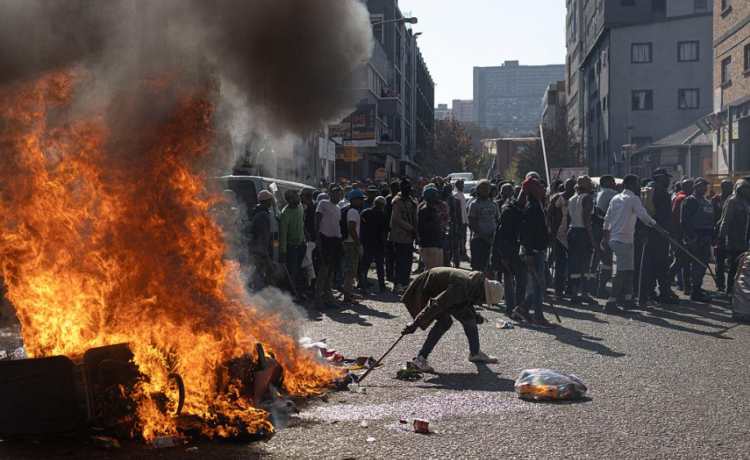
Anti-migrant protests turned violent in Johannesburg and Durban on Thursday, October 8, with shops looted and vehicles set on fire as authorities blamed misinformation surrounding a court ruling on asylum seekers.
According to Reuters, the unrest affected Johannesburg’s Soweto township and the coastal city of Durban. Businesses owned by foreign nationals were targeted during the demonstrations, while police were deployed to restore order.
In Durban, a Reuters reporter observed five burned vehicles in the city centre, alongside reports of foreign-owned shops being looted. Police said at least 14 vehicles had been set alight, while a guest house and a warehouse were partially burned.
In Soweto, protesters targeted a shop reportedly owned by a Somali national. The looters left after police arrived and dispersed the crowd. Authorities later said the situation in the township was under control.
South African government spokesperson William Baloyi said the violence was triggered by the spread of false information about a Constitutional Court ruling delivered in July.
The ruling clarified that asylum seekers should not be denied access to South Africa’s asylum system solely because of procedural issues, including entering the country illegally. However, it did not automatically grant undocumented migrants refugee status, permanent residence or other legal rights.
The government expressed concern that the decision had been misrepresented and used to encourage hostility towards foreign nationals.
Police officials promised to investigate the incidents and bring those responsible for violence and destruction to justice.
The protests reflect wider tensions surrounding migration, unemployment, crime and pressure on public services in South Africa. Foreign nationals have frequently been accused of taking jobs and contributing to insecurity, although social scientists have challenged claims that migrants are responsible for these problems.
South Africa continues to attract migrants from other African countries because of its relatively developed economy and employment opportunities. However, high unemployment and deep economic inequality have contributed to frustration among sections of the population.
The latest violence has renewed concerns about the safety of migrants, the protection of businesses and the role of misinformation in worsening social tensions.
Authorities face the challenge of maintaining public order while ensuring that legitimate concerns about migration are addressed without discrimination or violence.