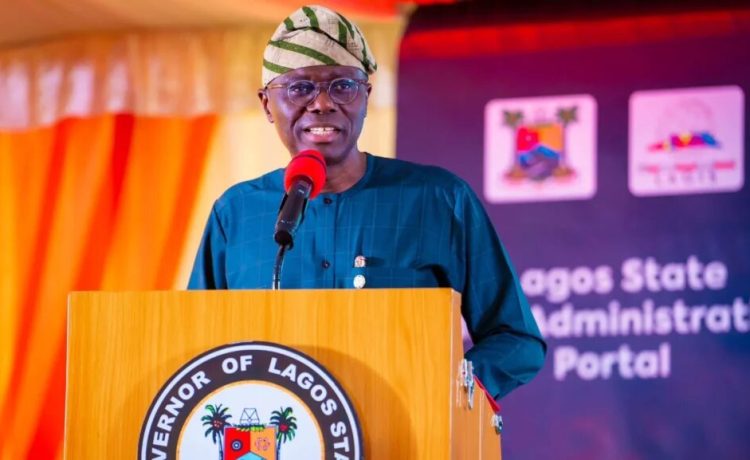
Lagos State Governor, Babajide Sanwo-Olu, has charged stakeholders in the power sector to end the persistent culture of blackouts in the state, stressing that reliable electricity is critical to building a resilient and progressive economy.
Sanwo-Olu made the call at a high-level strategic town hall meeting titled “Lagos State Government High-Level Strategic Town Hall Meeting on Ending the Culture of Blackouts and Building a Sustainable 24/7 Power Economy in Lagos State,” held at the State House, Marina.
The forum brought together key public and private sector stakeholders to develop concrete action plans towards achieving reliable and uninterrupted electricity supply across Lagos.
The state Deputy Governor, Kadri Hamzat, and members of the Lagos State Executive Council were also present at the meeting.
Representatives of major corporate and regulatory institutions also attended, including the Nigerian National Petroleum Company Limited (NNPC), Nigerian Upstream Petroleum Regulatory Commission (NUPRC), International Finance Corporation (IFC), Africa Finance Corporation (AFC), Lagos State Electricity Regulatory Commission (LASERC) and the Independent System Operator.
Sanwo-Olu said addressing Lagos’ persistent power deficit was essential to unlocking sustained economic growth and developing a resilient electricity market.
The governor challenged stakeholders to abandon corporate interests and excuses and confront the structural challenges limiting progress in the sector.
He urged participants “to drop corporate egos, abandon long-standing excuses, and confront the harsh realities obstructing progress in the power sector.”
Sanwo-Olu also acknowledged growing frustration within both the public and private sectors over repeated discussions on electricity challenges that have produced limited practical results.
According to the governor, the decentralisation and regulatory unbundling of Nigeria’s electricity sector have removed the longstanding argument that state governments are unable to take meaningful action because power remains exclusively under centralised federal control.
He noted that states now have greater authority to establish and manage independent electricity structures, making it necessary for state governments to demonstrate measurable progress.
“We, state governments, used to give excuses that everything is centralized, so the Federal Government has unbundled it now. What have we done in a year and a half?” Sanwo-Olu asked.
He expressed concern that despite the establishment of institutions such as LASERC, electricity supply challenges across Lagos remained severe.
“We take two steps forward, we go five steps backward,” the governor said.
Sanwo-Olu subsequently called for a closed-door dialogue among stakeholders to identify systemic weaknesses, government shortcomings and performance gaps within the private sector.
He said the interactive session was designed to move the discussion beyond repeated conversations and towards the development of a functional and actionable roadmap for delivering dependable electricity to Lagos residents and businesses.
The governor maintained that achieving a sustainable 24-hour power economy would require stronger collaboration between government institutions, regulators, investors, electricity operators and other stakeholders across the energy value chain.