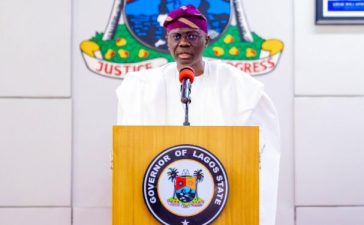
The Special Adviser to the Lagos State Governor on Climate Change and Circular Economy, Titilayo Oshodi, has said the proposed deployment of 80 million green cookstoves across Nigeria could transform public health, create jobs, reduce carbon emissions, and accelerate the country’s transition to a low-carbon economy.
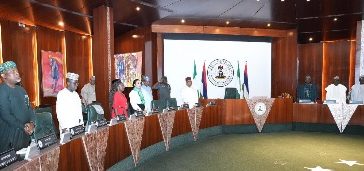
Oshodi made the remarks in a keynote address delivered virtually during a media chat, strategic project implementation management retreat, and stakeholders’ engagement organised by Greenplinth Africa Ltd in Lagos on Tuesday.
Describing the programme as one of the most ambitious clean energy initiatives on the African continent, she said increasing international interest in the project demonstrates a growing shift towards practical climate solutions capable of delivering measurable environmental and economic outcomes.
“The future of climate action extends beyond ambition alone. It is built on implementation-ready projects that are capable of delivering measurable impact on the environment, economic opportunity, public health improvement, and scalable community transformation,” Oshodi said.
She noted that more than 900 million Africans still depend on traditional biomass and inefficient cooking methods, a situation that continues to drive deforestation, environmental degradation, greenhouse gas emissions, and health-related challenges.
According to Oshodi, clean cooking should be viewed as more than an energy access issue, stressing that it is also a climate solution, a health intervention, a gender empowerment tool, an economic inclusion mechanism, and a pathway to sustainable development.
Highlighting the results of pilot projects conducted in Makoko, Lagos, which serves as the pilot state for the initiative, Oshodi said the programme achieved significant improvements in fuel efficiency and household energy consumption.
She disclosed that baseline assessments revealed households using conventional firewood stoves consumed an average of 10 kilogrammes of firewood daily, while larger households used as much as 33 kilogrammes.
“The pilot results showed a dramatic reduction in average daily consumption from 10 kilogrammes to approximately 1.37 kilogrammes per day. This is not incremental progress; this is transformational efficiency,” she stated.
Oshodi added that the initiative presents substantial opportunities in climate finance, carbon markets, local manufacturing, women’s empowerment, and green enterprise development.
“The 80 million green stove initiative sits at the intersection of climate action, carbon markets, green industrialisation, women’s empowerment, job creation, sustainable infrastructure and inclusive economic growth,” she said.
She called for stronger collaboration among governments, investors, development partners, manufacturers, and local communities to ensure the successful implementation of the project.
“Government alone cannot drive this transition. The private sector alone cannot guarantee widespread adoption. The opportunity before us is immense, the responsibility is shared, and the time to act is now,” Oshodi added.
Speaking at the event, the Chairman, Alhaji Ibrahim Jubril, who is the Emir of Nasarawa and President of the Nasarawa Emirate Council, described the adoption of clean cooking technologies as a vital step towards improving public health, reducing environmental degradation, and unlocking economic opportunities across Nigeria.
Drawing from his experience as a former Minister of State for Environment, Jubril emphasised that climate interventions must be tailored to local realities. He noted that strategies effective in Lagos may not be directly applicable in states such as Niger, Benue, and Nasarawa due to differences in geography, population distribution, and logistics.
He also expressed concern over the destruction of economic trees, including shea butter trees, in parts of northern Nigeria as a result of charcoal production, warning that continued deforestation could have severe environmental and economic consequences.
Referencing the 2025 report of the Clean Cooking Alliance, Jubril highlighted policy reforms and investments recorded in countries such as Kenya, Sierra Leone, and Nepal, expressing optimism that Nigeria could achieve similar success through research, proper documentation, government support, and stakeholder collaboration.
Earlier, the Group Financial Officer of Greenplinth Africa Ltd, Babatunde Aina, described the planned deployment of 80 million clean cookstoves as a transformative initiative capable of improving public health, empowering households, restoring the environment, and positioning Nigeria as a global leader in climate action.
Aina explained that the cookstoves would be distributed free of charge to households under a structured lease arrangement designed to ensure accountability and sustained use.
“We will deploy clean cookstoves to households free of charge, but under a structured lease agreement. This is not a charity handout. It is a disciplined impact programme,” he said.
According to him, beneficiaries who fail to use the stoves as intended may have them withdrawn and reassigned to households willing to participate actively in the programme.
He disclosed that participating households would receive a welfare package that includes a proposed monthly cooking support stipend of N10,000, free healthcare coverage for up to eight family members, and 40 kilogrammes of free biomass briquettes every month under a proposed 15-year programme.
“This is not just clean cooking. This is clean cooking linked to household resilience, family well-being, and social protection,” Aina said.
He further revealed that each cookstove is expected to prevent at least 15 metric tonnes of carbon emissions annually and would come with a 30-year warranty, underscoring the long-term environmental benefits of the initiative.