Afrobeats singer and activist, Folarin Falana, popularly known as Falz, has criticised the Federal Government over worsening insecurity and economic hardship, urging Nigerians to use the democratic process to express their dissatisfaction with governance.
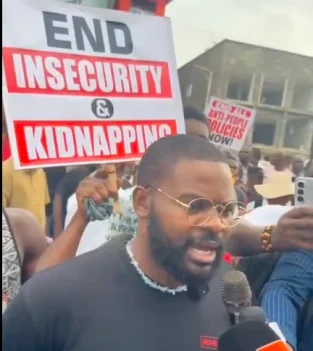
Falz spoke on Friday while addressing demonstrators at the June 12 protest in Lagos, where a coalition of civil society organisations, trade unions, youth groups, community associations, social movements and faith-based organisations gathered to protest rising insecurity and the growing cost-of-living crisis.
The entertainer said Nigeria was facing increasing cases of kidnappings and killings, lamenting what he described as the government’s inability to adequately protect citizens.
“Apart from the insane corruption and gross mismanagement of our resources, I think everybody can see the worsening insecurity. It’s unbearable now,” he said.
Falz cited recent abductions in different parts of the country, including the kidnapping of students and the abduction of a relative of a former minister in Oyo State. He argued that every Nigerian deserves equal protection, regardless of social status or political influence.
“They don’t care about us. They don’t care about ordinary people. But it must be known that no Nigerian life is more important than the other. Every single Nigerian life matters. And every single person must be cared for and protected at all costs,” he stated.
The singer called for urgent action to end kidnappings and killings across the country. He expressed concern that students continued to be abducted despite schools remaining open, describing the situation as alarming and unacceptable.
According to him, the growing insecurity and economic challenges have left many Nigerians frustrated and increasingly uncertain about the future.
When asked about the prospects of the ruling party in the next general election, Falz declined to make predictions. However, he said public dissatisfaction with the management of national affairs was becoming more visible.
He accused political leaders of failing to demonstrate the commitment needed to tackle the country’s pressing challenges despite spending considerable time in office.
The protest formed part of a nationwide action organised by a coalition of civic groups, labour activists, youth organisations and social movements. The coalition designated June 12 as a day of mass action against what it described as worsening insecurity, deepening economic hardship and declining living conditions across the country.
The declaration was contained in a joint statement signed by several prominent activists, including human rights lawyer Femi Falana (SAN), President of the Committee for the Defence of Human Rights, Yinka Folarin, #EndBadGovernance Movement organiser Hassan Soweto, and Falz.
Despite his criticism of government policies and performance, Falz reaffirmed his belief in democracy, stressing that Nigerians would ultimately use the ballot box to make their voices heard.
His comments reflect growing public concern over security and economic issues, which are expected to remain central topics in Nigeria’s political discourse ahead of future elections.