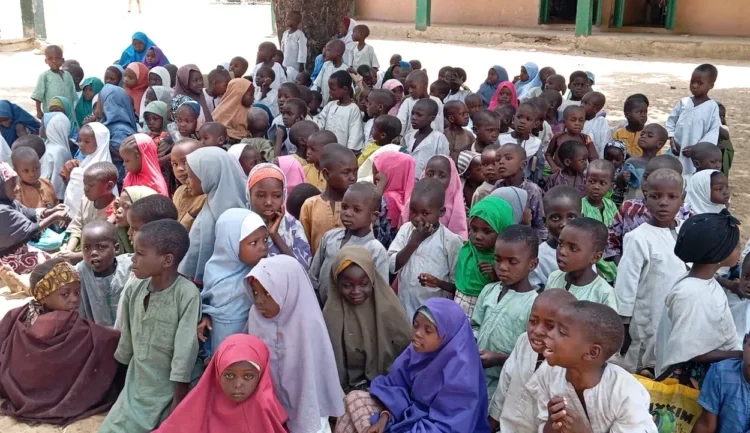
The Unique Care and Support Foundation (CASFOD) has enrolled 2,015 out-of-school children back into classrooms and provided treatment for 963 children suffering from Severe Acute Malnutrition (SAM) in Borno and Adamawa states.
The Executive Director of the organisation, Benjamin John, disclosed this on Friday during the launch and dissemination of CASFOD’s 2025 annual report in Maiduguri, the Borno State capital.
According to John, the organisation directly reached 34,942 people through its humanitarian programmes during the year under review. The beneficiaries included children, women, men, and persons with disabilities.
He attributed the achievements to the support received from donors, development partners, government institutions, and local communities.
“The year 2025 marked another significant milestone in our journey. Through the support of our donors, partners, government institutions, and communities, CASFOD directly reached around 34,942 persons, including children, women, men, and persons with disabilities,” he said.
John explained that CASFOD strengthened access to education through several interventions across the Northeast.
“We successfully enrolled 1,498 children into Accelerated Basic Education Programmes and supported 2,015 out-of-school children through school enrolment initiatives, teacher training, rehabilitation of classrooms, construction of gender-segregated latrines and boreholes, and distribution of learning materials in Borno and Adamawa states,” he added.
On health and nutrition, the Executive Director said the organisation implemented life-saving interventions through large-scale malnutrition screening, treatment, and referral services.
He revealed that a total of 14,596 children were screened for malnutrition across Damboa, Jere, and Konduga Local Government Areas of Borno State.
“Across Damboa, Jere, and Konduga LGAs in Borno State, a total of 14,596 children were screened for malnutrition, while 963 children suffering from Severe Acute Malnutrition received treatment through Outpatient Therapeutic Programmes (OTPs),” John stated.
He added that caregivers of the affected children received counselling and nutrition education to improve household care practices and support long-term recovery.
Beyond education and health, John noted that CASFOD made significant contributions to strengthening child protection systems, preventing and responding to gender-based violence, and enhancing accountability to affected populations through community engagement and safeguarding mechanisms.
“These achievements reaffirm our belief that sustainable impact is possible when communities are placed at the centre of interventions and when partnerships are built on trust, collaboration, and shared vision,” he said.
Despite the successes recorded, John acknowledged that the reduction in United States humanitarian funding had negatively affected relief efforts in the region.
He, however, assured stakeholders that the organisation would continue investing in programmes focused on recovery, resilience, education, health, and youth empowerment.
“As we look ahead to another phase of growth and impact, we feel inspired to set even bigger targets, strengthen our interventions, serve communities more effectively, and achieve even greater results. We therefore continue to seek your support, collaboration, and shared commitment,” he said.
John expressed appreciation to donors, development partners, government institutions, media organisations, community stakeholders, and beneficiary communities for their continued support throughout 2025.