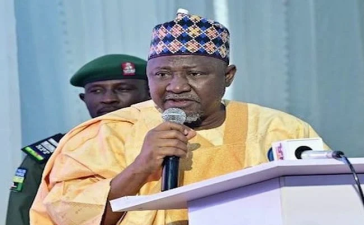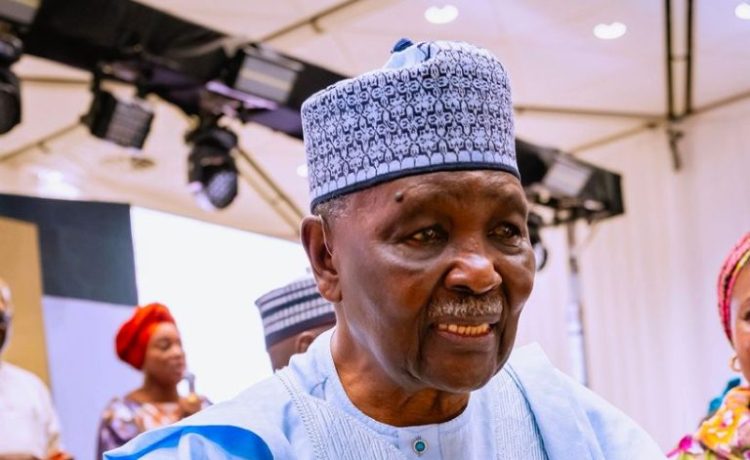
President Bola Ahmed Tinubu has described the autobiography of former Head of State, Yakubu Gowon, as an important national document that offers guidance for Nigeria’s future, regional cooperation, and the preservation of national unity.
The President also called for the wide circulation of the memoir across the country, describing it as a civic inheritance for all Nigerians.
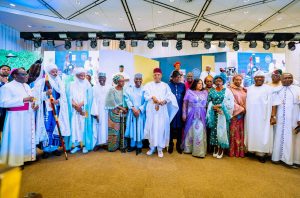
Tinubu made the remarks on Tuesday during the public presentation of Gowon’s autobiography at the Bola Ahmed Tinubu International Conference Centre in Abuja.
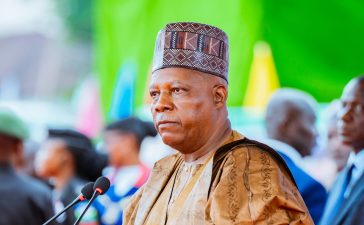
The President was represented at the event by Vice President Kashim Shettima.
According to Tinubu, the reflections of leaders who witnessed defining moments in Nigeria’s history remain essential for strengthening democratic stability and national cohesion.
He warned that nations that fail to preserve their historical memory risk repeating past mistakes and drifting into division.
“A nation that misplaces its memory soon begins to quarrel with its own reflection. A society without memory becomes an orphan in time,” the President said.
Tinubu observed that Gowon’s memoir was being released at a time when Nigeria and the wider West African region continue to face insecurity, economic challenges, and social fragmentation.
He noted that the lessons of reconciliation and statesmanship contained in the autobiography remain highly relevant.
The President praised Gowon’s reconciliation efforts after the Nigerian civil war, particularly the “No victor, no vanquished” declaration, which he described as one of the defining principles that helped preserve national unity.
He said peace and national healing can only be achieved through deliberate policies based on trust, inclusion, and shared citizenship.
“The decisions of that period cannot be understood by those who examine them with the arrogance of comfort. Every generation that inherits peace must learn to speak gently about the choices made in the season of peril,” Tinubu stated.
The President also highlighted the National Youth Service Corps as one of the enduring legacies of Gowon’s administration.
According to him, the programme has helped bridge ethnic, religious, and cultural divides among Nigerians across generations.
Tinubu further said Gowon’s life serves as a rejection of divisive narratives that seek to reduce Nigeria’s diversity into rigid regional or religious stereotypes.
“His story teaches us that the Nigerian project becomes stronger when a citizen refuses to become a weapon in the hands of sectarian entrepreneurs,” he added.
On regional affairs, Tinubu commended Gowon’s role in the establishment of the Economic Community of West African States, describing ECOWAS as one of Africa’s most important platforms for economic cooperation and collective security.
He stressed that the founding vision behind ECOWAS remains crucial as West Africa continues to confront terrorism, political instability, and economic disruption.
“We need cooperation against insecurity. We need trade that empowers our young people. We need diplomacy that prevents conflict from becoming contagion,” the President said.
Earlier, Gowon explained that the memoir was written to present his perspective on historical events and document his opportunity to serve Nigeria.
He said his story became inseparable from Nigeria’s history, adding that the autobiography reflects his modest attempt to tell his truth.
Ahead of the 2027 general elections, Gowon advised Nigerians not to listen to pessimistic voices, insisting that Nigeria would overcome its current challenges.
Former President Goodluck Jonathan, who chaired the occasion, described the memoir as a valuable reflection of leadership during one of Nigeria’s most turbulent historical periods.
Jonathan said autobiographies such as “My Life of Duty and Allegiance” are important for preserving institutional memory and deepening public understanding of major national events and decisions.
In his review of the book, Matthew Kukah described the memoir as a vivid account of Nigeria’s civil war experience and Gowon’s personal journey through the country’s turbulent history.
He noted that while no autobiography can fully summarise history, the book provides valuable insights into events during Gowon’s administration.
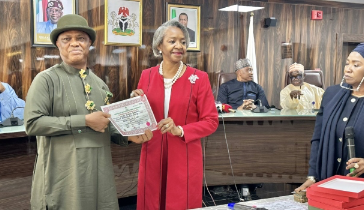
The event was attended by several prominent Nigerians, including former Head of State Abdulsalami Abubakar, Senator Oluremi Tinubu, former First Lady Patience Jonathan, Plateau State Governor Caleb Mutfwang, the Sultan of Sokoto Muhammad Sa’ad Abubakar III, and CAN President Daniel Okoh.