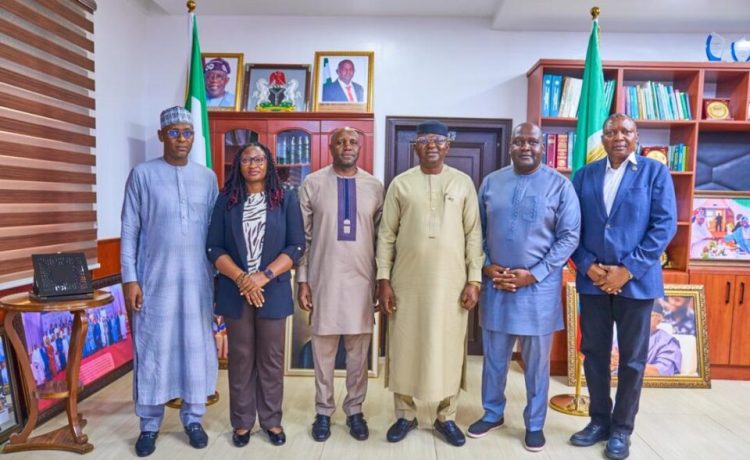
Nigeria and the African Union Commission have intensified efforts to accelerate access to safe water and sanitation across the continent following a high-level engagement with the African Ministers’ Council on Water in Abuja.
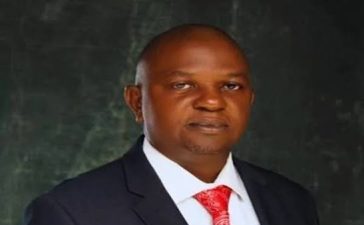
According to a statement issued on Wednesday by Nelson Gomonda, Officer-in-Charge of AMCOW at the AU Secretariat, Nigeria’s Minister of Water Resources and Sanitation, Joseph Utsev, received a delegation from the AU led by Harsen Nyambe, Director for Sustainable Environment and Blue Economy at the African Union Commission.
Gomonda and other senior officials were also part of the delegation that met with the minister at his office in Abuja.
Other members of the delegation included Bala Tuham, Lead for Corporate Services; Comfort Kanshio, Policy Officer for Water, Sanitation and Hygiene; and Jonathan Kampata, Adviser under the Blue Africa Action initiative.
The initiative is co-funded by the European Union and the German Federal Ministry for Economic Cooperation and Development, and implemented by Deutsche Gesellschaft für Internationale Zusammenarbeit.
Welcoming the delegation, Utsev said the visit was important in strengthening continental collaboration on water governance and policy implementation.
“We are honoured to receive this high-level delegation from the African Union Commission and AMCOW. Your presence underscores the shared commitment to advancing water security and sanitation across Africa,” the minister said.
He described the engagement as timely, noting ongoing efforts to operationalise continental frameworks aimed at closing Africa’s water access gaps.
“This visit is a clear demonstration of the strong partnership between Nigeria, the African Union, and AMCOW in driving forward a unified water and sanitation agenda for the continent,” he added.
Utsev stressed that sustained political will remains crucial to achieving progress, noting that water and sanitation are central to several sectors.
“Water security is central to Africa’s transformation. Without safe water and sanitation, we cannot achieve food security, industrialisation, or climate resilience,” he said.
The minister also highlighted the AU’s 2026 Theme of the Year — “Assuring Sustainable Water Availability and Safe Sanitation Systems” — as a major step in elevating the sector within Agenda 2063.
“The elevation of water and sanitation as the AU Theme of the Year reflects a growing recognition that these are not standalone issues but foundational pillars for Africa’s development,” he noted.
Utsev said Nigeria is ready to provide leadership in mobilising member states and partners to develop an actionable implementation plan that will deliver results across the continent.
He explained that the meeting would focus on developing the 2026–2033 implementation plan for the Africa Water Vision 2063, translating commitments into practical programmes.
Responding, Nyambe commended Nigeria’s consistent leadership in the sector and its role as host of the AMCOW Secretariat since 2002.
“Nigeria has remained a strong pillar of support for AMCOW and for Africa’s water governance architecture. This engagement further demonstrates that leadership,” he said.
Nyambe said the visit forms part of broader consultations aimed at advancing the implementation of the Africa Water Vision 2063.
“Our mission here is to deepen collaboration with key member states like Nigeria as we move towards implementing the Africa Water Vision 2063 and ensuring that no one is left behind,” he added.
Despite increasing policy attention, Africa continues to face significant water and sanitation challenges. According to the United Nations, more than 400 million people across the continent lack access to safe drinking water, while over 700 million are without adequate sanitation services.
In Nigeria, millions — particularly in rural and underserved communities — still lack access to safely managed water and sanitation, contributing to waterborne diseases and hindering socio-economic development.
Established in 2002, the African Ministers’ Council on Water serves as the African Union’s specialised platform for water policy coordination, working with development partners to mobilise investment and strengthen governance systems.
The Abuja engagement is expected to further consolidate regional cooperation as African countries intensify efforts to close water access gaps and achieve universal access in line with Agenda 2063.