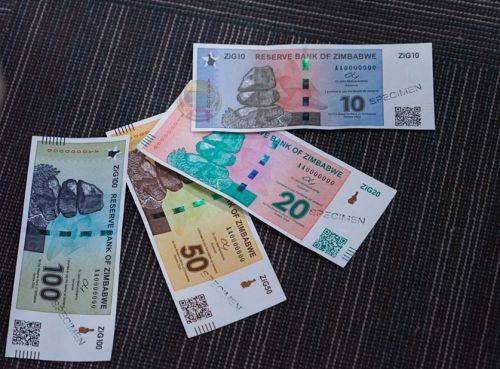
Zimbabwe’s Reserve Bank of Zimbabwe (RBZ) is intensifying efforts to encourage the use of its local currency, the Zimbabwe Gold (ZiG), aiming to strengthen monetary stability and reduce dependence on foreign currencies.
The central bank has launched a nationwide education and awareness programme ahead of the scheduled rollout of the Big5 ZiG banknote series on April 7, 2026. The campaign, titled “Meet the People,” has already reached 48 of the country’s 64 districts, covering 1,167 urban and rural centres and engaging 610,541 participants as of March 15.
During the campaign, RBZ reassured public sector suppliers that access to foreign currency will remain available through the willing-buyer willing-seller interbank market, even as government payments transition to ZiG.
Governor John Mushayavanhu explained that the ZiG is backed by a combination of foreign reserves and gold, designed to stabilise the currency and build public confidence. The campaign aims to familiarise citizens and businesses with the security features of the new banknotes and encourage their widespread use.
Analysts note that promoting ZiG in government payments could formalise economic activity, improve fiscal management, and enhance investor confidence. Economists say the move may contribute to long-term monetary stability while reducing the economy’s vulnerability to foreign currency volatility.
The RBZ highlighted that Zimbabwe’s historical reliance on multiple foreign currencies exposed the economy to exchange rate fluctuations, external shocks, and inflationary pressures. The introduction of the upgraded Big5 ZiG banknotes forms part of a broader strategy to mitigate these risks.
In February 2026, Zimbabwe recorded an inflation rate of 3.85%, down from 4.1% in January. Foreign currency reserves were estimated at around $16 billion in 2025, supporting import financing and contributing to price stability.