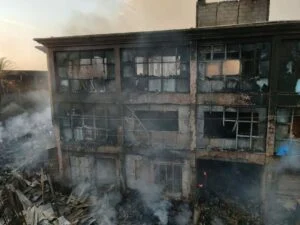
The Renewable Energy Association of Nigeria (REAN) has called for caution following reports linking the recent fire at Singer Market in Kano State to a possible solar battery explosion.
In a statement signed on Sunday by its Communications Director, Oisereime Lloyd-Dietake, the association said the cause of the inferno had not been officially confirmed by relevant authorities.
REAN expressed sympathy to victims and reiterated that safety remains a top priority in the deployment of renewable energy systems across Nigeria.
“The Renewable Energy Association of Nigeria is aware of reports concerning a recent fire incident that occurred at Singer Market, Kano, which has been speculated to have been linked to an explosion from a solar battery system.
“We are deeply concerned about the incident and extend our sincere thoughts to the individuals, businesses, and families affected. Safety remains paramount in the deployment and operation of renewable energy systems across Nigeria,” the statement read.
A devastating fire broke out at the historic Singer Market on February 14, destroying more than 1,000 shops and goods estimated to be worth over ₦5bn. Preliminary reports indicated that at least seven traders were still missing days after the blaze.
The disaster prompted swift government intervention. Vice-President Kashim Shettima announced a ₦5bn federal relief package for victims, while governors from the ruling party donated an additional ₦3bn, bringing total support to ₦8bn.
Days later, another fire incident occurred at a market in Kano’s Dakata area, destroying about 50 shops and heightening public anxiety over safety standards in commercial centres.
REAN noted that the development comes at a critical time for Nigeria’s renewable energy sector. Solar adoption is expanding rapidly due to unreliable grid supply, rising diesel costs and the government’s energy transition drive.
The association stressed that solar systems, including battery storage components, are globally recognised as safe when properly designed, installed and maintained according to established standards.
It warned, however, that growing demand for solar energy has attracted unqualified installers and substandard equipment, posing risks to consumer safety and industry credibility.
REAN outlined its longstanding efforts to promote industry standardisation. These include developing installation guidelines aligned with international best practices, structured training for installers and technicians, and collaboration with regulators to strengthen compliance and consumer protection.
The association disclosed that it has activated its internal incident response and review mechanism following the Kano fire.
According to REAN, the review will obtain verified facts from installers, equipment suppliers, regulatory authorities and affected users. It will also engage technical experts to determine the root cause of the incident and assess compliance with existing safety standards.
“Upon conclusion of the investigation, we will issue a detailed statement of facts and recommend clear preventive measures to mitigate the risk of recurrence,” the association said.
Nigeria has set ambitious targets to expand clean energy access and reduce dependence on fossil fuels, particularly through off-grid solar mini-grids and rooftop systems. However, experts caution that safety lapses could undermine public confidence if not addressed proactively.
REAN reaffirmed its commitment to transparency, accountability and continuous improvement of safety standards within Nigeria’s renewable energy ecosystem.