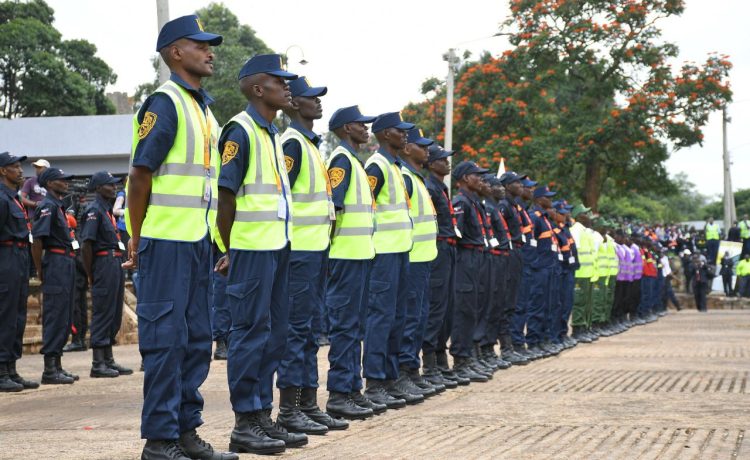
Nigerian security forces have rescued 308 people abducted in separate incidents in Kwara and Niger states, in what President Bola Tinubu described as the country’s largest same-day joint rescue operation.
The victims were reportedly located and freed from the Kainji Lake National Park, an area that has increasingly attracted attention because of the activities of criminal groups operating across parts of north-central Nigeria.
The rescued victims included 163 people abducted from Woro community in Kwara State. The community was attacked by gunmen in February, with reports indicating that at least 170 residents were killed during the assault.
Another 145 victims from Niger State were also rescued during the operation.
The successful operation provides relief to hundreds of families who have endured prolonged uncertainty over the whereabouts and safety of their relatives.
Kidnapping has remained one of Nigeria’s most persistent security challenges, with criminal groups frequently targeting rural communities, travellers and vulnerable residents for ransom.
The use of forests and difficult-to-access areas as hideouts has made it particularly challenging for security agencies to locate and rescue victims.
The operation at Kainji Lake National Park therefore represents a significant development in efforts to disrupt such criminal networks.
President Tinubu welcomed the operation, describing it as an important achievement for Nigeria’s security agencies.
The scale of the rescue also highlights the importance of cooperation among different security institutions.
Joint operations can enable security agencies to combine intelligence, personnel, surveillance capabilities and tactical resources when confronting criminal groups operating across state boundaries.
However, despite the successful rescue, no arrests were reported in connection with the operation.
This raises questions about the ability of security agencies to pursue the perpetrators responsible for the abductions and prevent them from regrouping.
The rescue nevertheless represents a major setback for kidnapping networks that have used remote locations as operational bases.
The ability of security forces to penetrate an area believed to be a criminal stronghold could make it more difficult for kidnappers to operate with impunity.
For the victims, the immediate priority is recovery and reunification with their families.
Many kidnapping survivors require medical attention and psychological support after spending extended periods in captivity.
Government authorities and humanitarian agencies may therefore need to provide appropriate assistance as the victims begin the process of rebuilding their lives.
The operation could also influence public perceptions of Nigeria’s security agencies.
For communities that have experienced repeated attacks and abductions, successful rescue missions can strengthen confidence in the government’s ability to protect citizens.
However, sustained public confidence will depend on whether security forces can move beyond rescue operations and significantly reduce the frequency of kidnappings.
Experts and security stakeholders have repeatedly emphasised the importance of intelligence gathering, effective prosecution, improved surveillance and stronger coordination among security agencies.
Addressing the economic and social conditions that allow criminal networks to recruit and operate will also remain important.
The rescue of 308 people is therefore an important victory, but it should be viewed as part of a broader effort to dismantle kidnapping networks across Nigeria.
For lasting progress, authorities will need to ensure that criminal groups are identified, prosecuted and prevented from establishing new bases.
The latest operation demonstrates that determined security action can produce significant results.
The challenge now is to build on the success and translate it into sustained improvements in the country’s overall security environment.