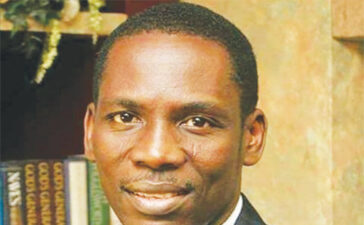
Reverend Julian Kyula of The Purpose Centre Church has stated that God instructed Apostle Femi Lazarus and his wife to establish their ministry base in Kenya.
The declaration came during a church service shared in a video posted on Tuesday by #AsakeGRN on X, where Rev. Kyula publicly welcomed the visiting cleric and his wife to the church in Kenya.
Apostle Femi Lazarus, speaking on stage alongside his wife, said the visit was not only to receive ministry but also to recognise what he described as a “new instruction” from God regarding their next phase of assignment.
He described the church as more than a congregation, referring to it as a “gate,” and said the visit marked a significant moment in their spiritual journey.
“We didn’t just come to hear the word; we came recognising that this is not just a church but a gate,” he said, adding that they were also present to receive and be spiritually strengthened.
He further expressed gratitude for the reception, noting that every nation carries divine grace needed for growth and development.
In response, Rev. Kyula stated that it was appropriate to say that God had placed it in the hearts of Apostle Femi Lazarus and his wife to be based in Kenya during this season.
He described the development as a sign of divine favour for the country, suggesting that Kenya is experiencing a moment of spiritual significance through the presence of global Christian leaders.
“Kenya, your time of favour has come,” he said, adding that the arrival of influential ministers choosing Kenya as a base reflects a unique spiritual visitation.
He compared the moment to past global Christian figures who had ministered across nations, describing it as a sign of increased spiritual attention on Kenya.
Rev. Kyula further urged the nation not to miss what he called a “moment of visitation,” emphasising that the presence of international ministers signals a significant spiritual season.
The remarks have since generated reactions within Christian circles, particularly across East and West African faith communities, as discussions continue around cross-border ministry collaboration and influence.