Iran has maintained its decision not to reopen the strategic Strait of Hormuz as long as a United States naval blockade remains in place, even as a temporary ceasefire between the two sides was extended.
The stance held into Thursday after Iranian forces seized two commercial ships attempting to pass through the vital shipping lane. The move came as the United States intensified maritime restrictions aimed at increasing economic pressure on Tehran.
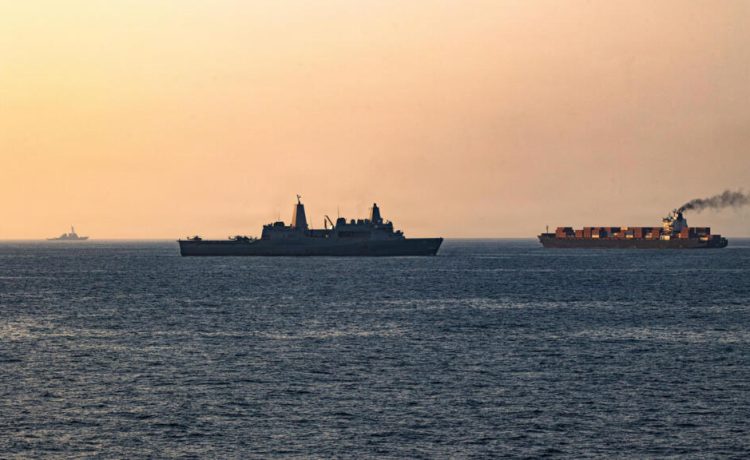
The United States Central Command, United States Central Command (CENTCOM), said late Wednesday that it had ordered 31 vessels to either turn back or return to port as part of what it described as a blockade against Iran.
Meanwhile, US President Donald Trump announced earlier in the week that the ceasefire would remain in place temporarily to allow time for diplomatic efforts being facilitated by Pakistan.
Iran welcomed Pakistan’s mediation but stressed that the truce could not hold while Washington continued maritime pressure.
Iranian Parliament Speaker Mohammad Bagher Ghalibaf, who led Tehran’s delegation in the initial round of talks in Islamabad, said a ceasefire loses credibility if accompanied by a naval blockade.
“A complete ceasefire only has meaning if it is not violated through a naval blockade,” Ghalibaf said. “Reopening the Strait of Hormuz is not possible amid a blatant violation of the ceasefire.”
Global oil markets responded quickly to the escalating tensions around the key energy corridor. Prices initially surged before easing later in the day.
Benchmark US crude, West Texas Intermediate (WTI), rose more than four percent to $96.73 per barrel, while international benchmark Brent crude climbed 3.62 percent to $105.63 before both contracts retreated slightly.
The Strait of Hormuz serves as the primary transit route for roughly one-fifth of the world’s oil supply, making disruptions there a major concern for global markets.
Iran’s elite naval unit, the Islamic Revolutionary Guard Corps (IRGC), confirmed that it intercepted two vessels in the waterway early Thursday.
According to the Guards, the ships — the Panama-flagged container vessel MSC Francesca and the Liberia-flagged Epaminondas — were identified as violating navigation rules before being escorted to Iranian shores.
Panama’s foreign ministry confirmed the seizure of the MSC Francesca, describing the action as a serious threat to maritime security and an unnecessary escalation of tensions.
Maritime security monitors also reported incidents involving armed boats in the region. The UK-based monitoring group United Kingdom Maritime Trade Operations (UKMTO) said one commercial container ship reported being fired upon by a Revolutionary Guards vessel roughly 15 nautical miles northeast of Oman.
The attack reportedly damaged the vessel’s bridge but caused no casualties.
Under instructions from Trump, the US Navy has been attempting to prevent ships from entering or leaving Iranian ports, part of Washington’s effort to tighten economic pressure without launching a full-scale war.
In the midst of the escalating maritime confrontation, the Pentagon announced that John Phelan would leave his position immediately. Officials did not give a reason for the sudden departure.
The decision follows a series of high-profile leadership changes under Defense Secretary Pete Hegseth.
Iran has responded to the blockade by insisting that vessels entering or exiting the Gulf must first obtain permission from Iranian authorities.
Beyond the Gulf crisis, regional tensions remain high despite ceasefire announcements.
Following the US-Iran truce, Washington also helped broker a temporary halt in hostilities between Israel and Lebanon, including the Iran-backed militant group Hezbollah.
However, violence has continued. Lebanese media reported that Israeli strikes killed five people on Wednesday, including journalist Amal Khalil, while another reporter was wounded near the border.
French President Emmanuel Macron also announced that a second French soldier wounded during an ambush against UN peacekeepers in Lebanon had died.
Diplomatic efforts are ongoing, with Israeli and Lebanese officials scheduled to hold a second round of talks in Washington on Thursday. Lebanese authorities are expected to request a one-month extension of the ceasefire and demand an end to Israeli strikes in areas where its forces remain deployed.
Lebanese officials say Israeli attacks have killed more than 2,450 people since the conflict began, underscoring the fragile nature of the current ceasefire arrangements.