President Bola Ahmed Tinubu has defended his administration’s support for the Dangote Refinery, stating that Nigeria could have faced a major energy crisis without domestic refining capacity amid ongoing global conflicts.
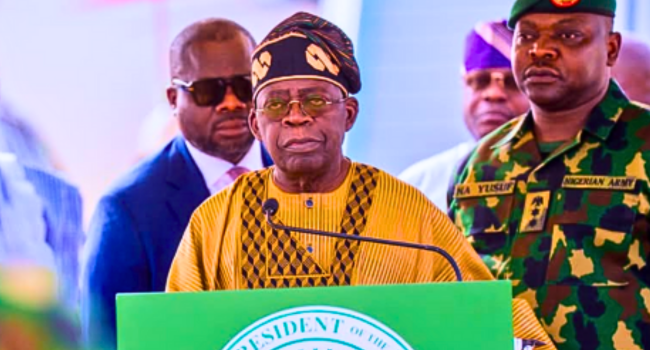
Speaking on Thursday at the sidelines of the 13th Africa CEO Forum in Rwanda, Tinubu said Nigeria’s large population and heavy dependence on petroleum products made it essential to support local refining initiatives.
“Today, with the crisis around the whole world, particularly around conflict, Nigeria wouldn’t be able to survive, over 200 million people, without a refinery,” he said.
The President explained that backing the Dangote Refinery was a strategic decision aimed at strengthening national energy security and reducing reliance on imported fuel.
“A risk-taker like the Dangote Refinery must be encouraged by the government in power. What I did was support him, give him free trade for his own licence, and support him in his efforts to source the crude that is necessary,” he added.
Tinubu noted that the refinery has already begun producing petroleum products, including petrol (PMS) and aviation fuel, positioning Nigeria as a potential exporter rather than a net importer.
The remarks come amid rising global energy uncertainty driven by ongoing conflicts in the Middle East, which have disrupted major oil supply routes and contributed to volatility in international crude and fuel prices.
Energy analysts say these disruptions have prompted several countries to reassess their fuel import dependence and strengthen domestic refining capacity to improve energy resilience.
The Dangote Refinery, owned by billionaire industrialist Aliko Dangote, represents a major shift in Nigeria’s downstream petroleum sector, which has historically relied heavily on imported refined products.
The facility is expected to reduce pressure on foreign exchange demand, stabilize fuel supply, and support Nigeria’s broader energy independence agenda.
Government officials have repeatedly emphasized that increasing local refining capacity is central to long-term economic stability and energy security planning.