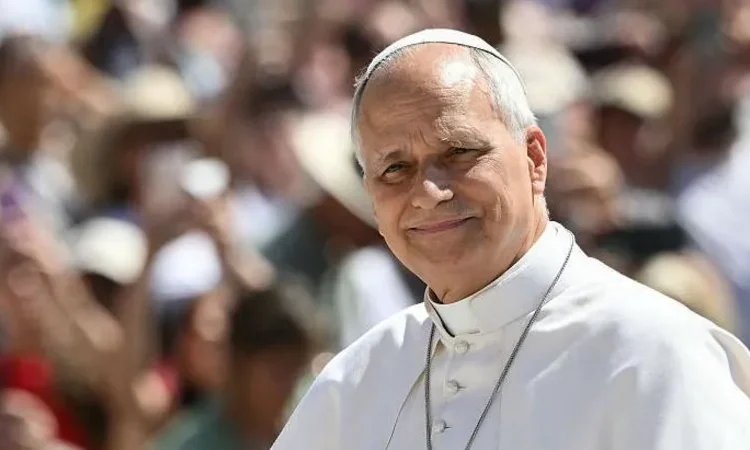
Ghana has welcomed Pope Leo XIV’s apology for the Catholic Church’s historic role in slavery, describing it as an “act of moral courage” in the global pursuit of truth, human dignity, and justice.
The apology was published on Monday in the Pope’s first major teaching document, which also addressed the growing risks posed by artificial intelligence (AI), and represents the clearest acknowledgment yet by a pontiff of the Church’s involvement in legitimising slavery.
In the document, titled “Magnifica Humanitas” (“Magnificent Humanity”), Pope Leo XIV expressed deep sorrow over centuries of suffering linked to slavery and asked for forgiveness in the name of the Church.
“It is impossible not to feel deep sorrow when contemplating the immense suffering and humiliation endured by so many,” the Pope wrote.
He also acknowledged that Church authorities historically responded to the demands of rulers by regulating and legitimising forms of subjugation, including the enslavement of non-Christians, adding that ecclesiastical institutions themselves once owned slaves.
“This constitutes a wound in Christian memory,” he stated.
Ghana, which was a major hub during the transatlantic slave trade, said the apology was a significant step toward healing and reconciliation.
Between the 16th and 19th centuries, an estimated 12 to 15 million Africans were forcibly transported across the Atlantic, with about two million dying during the journey.
The Ghanaian government said the Pope’s acknowledgment of this painful history strengthens global efforts to confront historical injustice through truth-telling and moral responsibility.
“[The apology] reinforces the growing global understanding that confronting historical injustices demands truth-telling and moral responsibility as essential foundations for justice and reconciliation,” a government statement said.
Ghana has been at the forefront of international advocacy for reparations related to slavery and colonialism, including successfully pushing for a United Nations resolution in March recognising the enslavement of Africans as the “gravest crime against humanity.”
The resolution, backed by the African Union and submitted by President John Mahama, aims to establish pathways for reparative justice and address the long-term consequences of slavery, including inequality and racial discrimination.
The West African nation also plans to host a conference in June to advance discussions on implementation of the UN resolution and broader reparations efforts.
Human Rights Watch welcomed the Pope’s apology but stressed that symbolic gestures alone are insufficient, calling for concrete reparative actions from institutions that benefited from slavery, including religious bodies, states, and corporations.
The organisation said meaningful justice requires a full reckoning with historical responsibility and active participation in reparative initiatives.
Ghana, which still preserves historic slave forts along its coast used during the transatlantic slave trade, continues to position itself as a leading voice in global discussions on historical justice and reparations.