Nigeria’s organized private tourism sector has renewed its call for sweeping reforms in the country’s tourism industry, urging the Federal Government to return the controversial National Institute for Hospitality and Tourism (NIHOTOUR) Act and the Nigerian Tourism Development Authority (NTDA) Act to the National Assembly for comprehensive review.
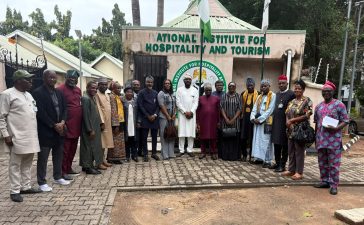
The call formed the centrepiece of a press conference held by the Federation of Tourism Associations of Nigeria (FTAN) to commemorate one year of the current administration led by its President, Dr. Badaki Aliyu, PhD.
Addressing journalists under the theme, “Changing the Narrative: Tackling the Structural Challenges of Nigeria’s Tourism Industry Through the Tourism Transformation Mandate (TTM),” Dr. Aliyu said the Federation remains committed to repositioning tourism as a major contributor to economic diversification, investment attraction, employment generation and regional integration.
He explained that the administration deliberately used its first year in office not only to implement programmes but also to identify the deep-rooted structural challenges limiting the growth of Nigeria’s tourism industry.
According to him, sustainable transformation can only be achieved by confronting these challenges through practical reforms, stronger institutions and continuous engagement with stakeholders.
FTAN Seeks Review of NIHOTOUR and NTDA Acts
A major highlight of the briefing was FTAN’s appeal to the Federal Government to urgently facilitate the return of both the NIHOTOUR Act and the NTDA Act to the National Assembly for re-enactment.
The Federation argued that the existing laws have created regulatory overlaps, uncertainty and avoidable conflicts within the industry.
According to FTAN, the implementation of the NIHOTOUR Act 2022 has generated unprecedented disputes and litigation across the tourism sector.
The organisation noted that the disagreements surrounding the legislation were inherited from previous administrations, adding that the current legal framework has failed to clearly define the responsibilities of government agencies and industry stakeholders.
Dr. Aliyu said the confusion has negatively affected operators, disrupted business activities and created divisions within the industry.
He also expressed concern over the activities of what he described as “fifth columnists” whose personal interests have further complicated the implementation of the law.
FTAN therefore urged the Federal Government, through the Federal Ministry of Arts, Culture, Tourism and the Creative Economy, to expedite the legislative review process in line with the Renewed Hope Agenda of the present administration.
Pending the review, the Federation recommended that both NIHOTOUR and NTDA should temporarily return to their original statutory mandates to minimise conflicts and restore stability across the sector.
The Federation stressed that it remains committed to constructive dialogue with government agencies and all stakeholders to achieve lasting solutions.
Protecting Members’ Interests Remains Top Priority
Dr. Aliyu reaffirmed that one of the administration’s primary responsibilities is protecting the interests, investments and businesses of FTAN members.
He said the Federation exists as the umbrella body of organised private tourism operators and will continue to champion policies that create a more enabling environment for businesses to thrive.
According to him, every advocacy effort undertaken by the current leadership has been guided by the need to safeguard tourism operators from policies capable of discouraging investment or creating unnecessary regulatory burdens.
He explained that FTAN’s objective is not merely to oppose government policies but to ensure that industry regulations reflect operational realities and support sustainable business growth.
The President said a vibrant tourism industry can only emerge when operators have confidence in government policies and regulatory institutions.
Tourism Transformation Mandate Driving Reforms
The Federation also reviewed progress made under its Tourism Transformation Mandate (TTM), which now serves as FTAN’s strategic blueprint for institutional reforms.
Within the past year, the administration has strengthened the Federation’s governance structure, improved stakeholder engagement and developed a comprehensive work plan to reposition the organisation.
Plans are also underway to inaugurate zonal structures that will strengthen state chapters and deepen grassroots participation across Nigeria.
FTAN said these reforms are designed to build a stronger and more responsive private sector institution capable of providing credible leadership for the tourism industry.
Strengthening Government-Private Sector Collaboration
Recognising that tourism development requires collaboration, the Federation disclosed that it has rebuilt productive relationships with the Federal Ministry of Arts, Culture, Tourism and the Creative Economy, the Nigerian Tourism Development Authority and other government institutions.
According to the leadership, these partnerships have improved communication between government and private sector operators while enhancing FTAN’s recognition as the authentic voice of organised tourism businesses in Nigeria.
The Federation believes stronger public-private partnerships remain essential for policy implementation, investment promotion and sustainable industry development.
Nigeria Positioned for Regional Tourism Leadership
FTAN also highlighted significant progress in strengthening Nigeria’s regional tourism presence.
The Federation announced that it has restored institutional relationships with the ECOWAS Commission, expanded cooperation with COPITOUR and strengthened engagement with regional tourism organisations.
One of the administration’s major achievements is securing ECOWAS support for the hosting of the COPITOUR Executive Meeting in Abuja during the Nigeria Tourism Investors Forum and Exhibition (NTIFE) 2026.
According to FTAN, the event will provide Nigeria with an unprecedented opportunity to promote investment, encourage cross-border partnerships and reinforce its position as West Africa’s tourism hub.
Investment Promotion Takes Centre Stage
The Federation said it has repositioned the Nigeria Tourism Investors Forum and Exhibition into a broader regional investment platform capable of attracting investors, development partners, financial institutions and state governments.
The initiative is expected to facilitate project financing, business partnerships and investment opportunities across the tourism value chain.
FTAN believes investment remains one of the most critical ingredients for unlocking Nigeria’s enormous tourism potential and creating sustainable employment opportunities.
Increased Industry Visibility
As part of efforts to improve public awareness, FTAN reported significant improvements in media engagement, stakeholder communication and advocacy campaigns during the past year.
The administration said these initiatives have enhanced the Federation’s visibility while promoting greater confidence in Nigeria’s tourism industry.
The organisation added that sustained advocacy remains necessary to position tourism as a key pillar of economic diversification and national development.
FTAN Reaffirms Commitment to Industry Growth
Looking ahead, the Federation pledged to continue implementing the Tourism Transformation Mandate while intensifying advocacy for policy reforms and investment-friendly legislation.
It also promised to sustain engagement with the Federal Government, state governments, development partners and international organisations to strengthen Nigeria’s tourism ecosystem.
FTAN reiterated that its long-term vision is to build a stronger, more united and influential organised private tourism sector capable of driving national economic transformation.
The Federation concluded that while considerable work still lies ahead, the first year of the current administration has laid a solid foundation for institutional reforms and a more competitive tourism industry.
It therefore called on governments, investors, development partners and industry practitioners to support the collective vision of building a globally competitive, investment-driven and sustainable tourism sector for Nigeria.