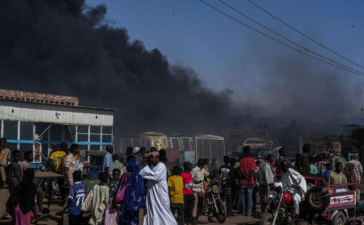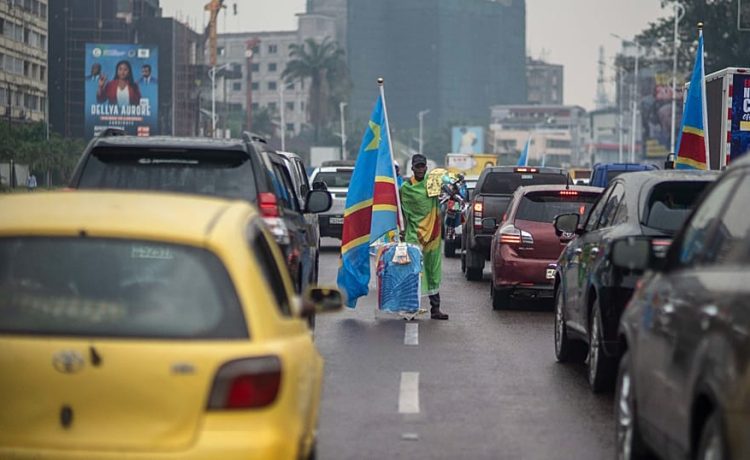
Dozens of people gathered in the capital of the Democratic Republic of the Congo to take part in a political forum known locally as a “standing parliament,” where citizens openly debate national issues and government policies.
The gatherings, which are often attended by supporters of the ruling Union for Democracy and Social Progress (UDPS), are increasingly being used to discuss ideas connected to the government and the country’s political future.
Participants in the discussions addressed several issues, including the ongoing conflict in eastern DR Congo and the possibility of constitutional reforms.
Jean-Claude Mwamba, coordinator of the UDPS “standing parliaments,” suggested that constitutional changes could be considered once the conflict in the east ends.
“When we finish the war in the east of the Democratic Republic of Congo, that will be the moment when we will change the Constitution,” Mwamba said.
He also dismissed warnings raised by former president Joseph Kabila about the risk of instability similar to the crisis in Sudan.
“All those things Kabila said, that there is a risk of ‘Sudanization’, that will not happen here. We are united, the Congolese people are united,” Mwamba added.
Some political observers believe the gatherings, though seemingly spontaneous, could be used to test public reaction to the possibility of constitutional amendments that might allow the current president, Felix Tshisekedi, to seek a third term in office.
However, not all participants agreed that constitutional change should be a priority at this time.
Leon Niondo, a UDPS activist, said peace should come first before any discussion about extending presidential term limits.
“We don’t need that term in office, that third term. What we want first is for there to be peace. When the war is over, then we will talk about that term calmly,” he said.
Another activist, Abel Mutombo, argued that revising the constitution was necessary for the country’s future.
“The current Constitution is a bill of sale. Our country has been sold. Now we Congolese want to take back our country by changing the Constitution,” Mutombo said.
The tradition of “standing parliaments” dates back to the 1970s during the rule of former dictator Mobutu Sese Seko. At the time, the gatherings served as informal public forums where citizens could express dissent and challenge government authority.
Today, the gatherings remain part of Congo’s political culture, reflecting both grassroots debate and the evolving tensions surrounding governance and reform in the country.