African countries are stepping up efforts to secure a stronger voice in the negotiations over a new global tax system, as governments across the continent seek rules that could help them raise more domestic revenue and reduce losses linked to tax avoidance and illicit financial flows.
The negotiations are taking place under the United Nations Framework Convention on International Tax Cooperation, an initiative aimed at creating a more inclusive international system for dealing with cross-border taxation.
For many African governments, the discussions are particularly important because limited domestic revenue remains a major challenge. Countries need additional resources to finance infrastructure, healthcare, education, social protection and economic development, while many are also dealing with high debt levels and rising financing costs.
The African Tax Administration Forum (ATAF) has been actively involved in the negotiations, arguing that international tax rules must better reflect the circumstances of developing economies. The organisation has highlighted issues including the allocation of taxing rights, taxation of high-net-worth individuals, illicit financial flows and mechanisms for resolving tax disputes.
One of Africa’s key concerns is ensuring that countries where economic activity actually takes place have sufficient rights to collect tax. This has become increasingly important as businesses expand their digital and cross-border operations.
During the latest negotiations, African countries pushed for stronger taxing rights over income generated from cross-border services. Nigeria, speaking on behalf of the Africa Group as well as nationally, supported rebalancing taxing rights towards source countries. Kenya also backed stronger rules on taxing rights and raised concerns that traditional requirements based on physical presence could disadvantage developing countries.
The issue is especially significant for African economies because companies can provide services to customers in a country without necessarily having a large physical presence there. Under older international tax arrangements, this can make it difficult for governments to collect an appropriate share of tax revenue.
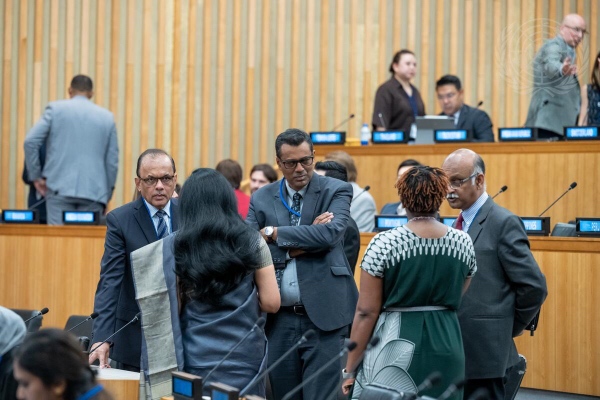
The fifth session of negotiations for the UN tax convention was held at the UN headquarters in New York from August 3 to 13, 2026. The discussions focused on draft provisions that could eventually form part of the international framework. Civil society groups said the talks represented an important opportunity to create a fairer international tax system and improve the way taxing rights are shared between countries.
African representatives have also been pushing for the future convention to provide adequate technical support for developing countries. The Africa Group has argued that the convention’s secretariat should have clearly defined responsibilities and sufficient resources to help countries implement the eventual rules.
This is important because negotiating a new international agreement is only part of the challenge. Many African tax authorities also face difficulties involving technology, staffing, information sharing and the enforcement of complex international tax rules.
At the same time, African countries are working to strengthen domestic tax collection. A 2026 report from the OECD Global Forum on Transparency and Exchange of Information for Tax Purposes found that African countries identified €417 million in additional tax revenue during 2025 through the exchange of information and related voluntary disclosure programmes. The report said these measures are helping countries tackle tax evasion, illicit financial flows and other forms of revenue leakage.
The global negotiations could therefore complement efforts already taking place within Africa. Stronger international cooperation could make it harder for individuals and multinational companies to move profits or assets across borders simply to reduce their tax obligations.
However, reaching agreement will not be easy. Countries have different economic interests, and developed and developing nations do not always agree on how taxing rights should be distributed. Questions around implementation, confidentiality, dispute resolution and the responsibilities of different countries remain part of the wider negotiations.
For African governments, the stakes are high. A stronger international tax framework could potentially provide countries with additional tools to collect revenue from cross-border economic activity and reduce the amount of money lost through aggressive tax avoidance and illicit financial practices.
African tax officials and regional organisations are therefore expected to continue coordinating their positions as negotiations progress. Their objective is not simply to participate in the discussions but to ensure that the final rules recognise the economic realities of developing countries.
The outcome could have long-term consequences for Africa’s ability to finance its own development. With many governments under pressure to increase revenue without placing excessive burdens on ordinary citizens, securing fairer international tax rules has become an increasingly important part of the continent’s economic agenda.