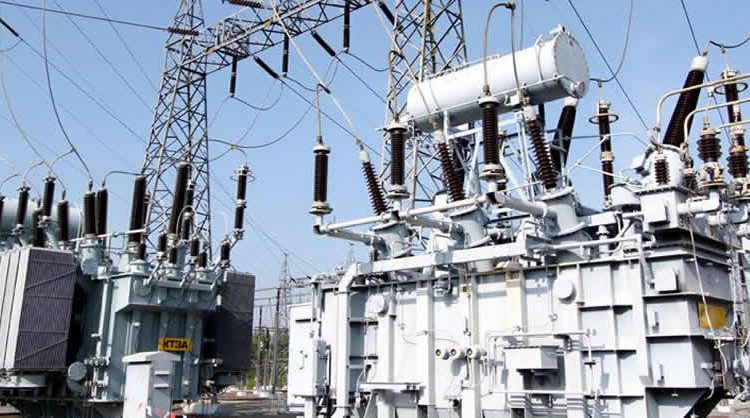
Nigeria’s electricity sector has once again come under scrutiny after the Nigerian Electricity Regulatory Commission (NERC) disclosed that transmission inefficiencies cost the industry an estimated ₦2.61 billion during the first quarter of 2026.
The losses occurred because the Transmission Company of Nigeria (TCN) failed to achieve the Transmission Loss Factor (TLF) benchmark set by the regulator under the Multi-Year Tariff Order (MYTO).
Although the financial loss was lower than the ₦3.13 billion recorded in the fourth quarter of 2025, industry experts say the latest figures demonstrate that significant challenges remain within Nigeria’s electricity transmission network.
The report also raises fresh concerns about the efficiency of the national grid, the cost of delivering electricity and the need for sustained investment in transmission infrastructure.
Understanding Transmission Losses
Electricity generated at power plants does not always reach homes, businesses and industries in its entirety.
Some of the energy is lost while travelling through transmission lines due to technical limitations, ageing infrastructure, overloaded equipment and operational inefficiencies.
This lost electricity is known as transmission loss.
To measure how efficiently electricity moves across the national grid, regulators use a benchmark called the Transmission Loss Factor (TLF).
The lower the TLF, the more efficient the transmission system.
Conversely, a higher TLF indicates that more electricity is being lost before it reaches electricity distribution companies (DisCos) or export customers.
According to NERC, Nigeria recorded an average Transmission Loss Factor of 7.96 percent during the first quarter of 2026.
This exceeded the approved benchmark of 7.00 percent, meaning the transmission network performed below regulatory expectations.
Breakdown of the ₦2.61 Billion Loss
The commission’s report revealed that the total estimated loss of ₦2.61 billion consisted of two major components.
The first was approximately ₦257.91 million, representing direct costs associated with transmission losses.
The second and much larger component was about ₦2.35 billion, which represents penalties payable to electricity generation companies (GenCos).
These penalties arise because electricity producers generate power that cannot be fully transmitted to distribution companies due to limitations within the transmission system.
When electricity generated cannot be evacuated efficiently, financial consequences affect multiple participants across the electricity value chain.
Ultimately, these inefficiencies increase operating costs across the sector.
Why Transmission Efficiency Matters
Efficient electricity transmission is one of the foundations of a reliable power sector.
Generating electricity alone is not enough.
Power must also be transmitted safely and efficiently from generation stations to distribution companies before it reaches consumers.
When transmission losses increase, less electricity becomes available for households, industries and commercial users.
This contributes to persistent electricity shortages despite improvements in generation capacity.
Lower transmission efficiency also reduces the overall productivity of investments already made in power generation.
If generated electricity cannot be delivered effectively, the country fails to maximise the benefits of existing generating plants.
Impact on Electricity Consumers
Although transmission losses occur within the electricity supply chain, consumers often feel the consequences.
Reduced efficiency contributes to unstable electricity supply, frequent outages and load management measures.
Businesses that rely on uninterrupted power are forced to depend more heavily on diesel and petrol generators.
This significantly increases operating costs and reduces competitiveness.
Manufacturing companies, hospitals, educational institutions and small businesses all experience productivity losses when electricity supply becomes unreliable.
Households also bear additional financial burdens as many families spend substantial amounts on alternative sources of electricity.
The State of Nigeria’s Transmission Infrastructure
Nigeria’s transmission infrastructure has expanded over the years, but demand for electricity has grown even faster.
Much of the country’s transmission network consists of ageing equipment that requires rehabilitation or replacement.
Some transmission lines have exceeded their designed operational lifespan, while several substations continue to operate near maximum capacity.
Population growth, urbanisation and industrial expansion have placed additional pressure on existing infrastructure.
Without continuous investment, these challenges become increasingly difficult to manage.
Industry experts have repeatedly called for accelerated upgrades to improve the reliability and capacity of the national grid.
Investments Remain Critical
The Federal Government has continued to invest in expanding transmission capacity through various intervention programmes.
Several transmission projects have been implemented in partnership with international development agencies and multilateral financial institutions.
These projects include the construction of new substations, rehabilitation of transmission lines and installation of higher-capacity transformers.
However, experts argue that infrastructure investments must continue at a faster pace if Nigeria is to meet growing electricity demand.
Modern technologies such as smart grid systems, digital monitoring equipment and automated transmission management could further improve operational efficiency.
The Role of the Nigerian Electricity Regulatory Commission
NERC plays an important role in monitoring the performance of operators across Nigeria’s electricity market.
Through performance benchmarks like the Transmission Loss Factor, the regulator measures how efficiently electricity moves across the national grid.
The commission also imposes financial consequences when regulated entities fail to meet established targets.
These measures are designed to encourage continuous improvement throughout the electricity supply chain.
Regular publication of sector performance reports also promotes transparency by allowing stakeholders to monitor operational performance.
Such accountability helps identify areas requiring urgent policy attention.
Economic Consequences of Poor Transmission
Nigeria’s economic development depends heavily on reliable electricity.
Manufacturing, agriculture, telecommunications, healthcare and digital services all require stable power supply.
When electricity transmission becomes inefficient, businesses face higher production costs.
Investors may also become reluctant to establish new industries where electricity reliability remains uncertain.
Reduced industrial productivity ultimately slows economic growth, limits job creation and weakens national competitiveness.
Improving transmission efficiency therefore extends beyond the power sector.
It directly supports broader economic development objectives.
Opportunities for Reform
While the latest report highlights ongoing challenges, it also presents an opportunity for further reform.
Improving transmission efficiency will require stronger coordination between government agencies, regulators, electricity operators and private investors.
Long-term planning should prioritise preventive maintenance rather than emergency repairs.
Greater investment in technology can also improve system monitoring and reduce operational losses.
Training technical personnel remains equally important as modern electricity networks require specialised skills to operate efficiently.
Public-private partnerships may provide additional financing needed to accelerate infrastructure development.
Signs of Gradual Improvement
Despite missing the regulatory target, the first-quarter loss of ₦2.61 billion represents an improvement compared to the ₦3.13 billion recorded during the previous quarter.
This suggests that some progress is being made, although the pace remains slower than many stakeholders would like.
Continued investment, stronger operational management and effective regulatory oversight could help sustain this gradual improvement.
If transmission losses continue to decline, more electricity will reach distribution companies, improving service delivery to consumers while reducing financial losses across the electricity market.
Looking Ahead
Nigeria’s electricity sector remains one of the country’s most critical industries, supporting economic growth and improving the quality of life for millions of citizens.
The latest NERC report highlights the importance of strengthening transmission infrastructure to reduce energy losses and improve grid efficiency.
While recent figures indicate modest progress, achieving long-term stability will require sustained investment, effective regulation and consistent infrastructure upgrades.
Reducing transmission losses will not only improve electricity supply but also lower operational costs, strengthen investor confidence and support Nigeria’s broader economic development goals.
As electricity demand continues to grow, improving transmission efficiency will remain central to building a more reliable and resilient power sector capable of meeting the country’s future energy needs.