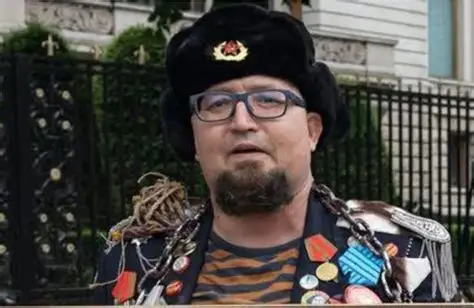
Polish police have arrested a man suspected of involvement in the murder of Russian artist and Kremlin critic Semyon Skrepetsky, Prime Minister Donald Tusk announced on Thursday.
According to Tusk, the suspect was detained after the fatal shooting of the artist in the eastern Polish city of Biala Podlaska on Monday. The suspect is reportedly travelling on a Georgian passport.
“Services are working to establish the mastermind,” Tusk wrote in a post on X.
Skrepetsky, whose real name was Robert Kuzovkov, was shot three times by an unidentified gunman. Authorities said that after the artist fell to the ground, the attacker approached him and fired two additional shots at close range, killing him.
The Polish prime minister suggested on Wednesday that the killing may have been politically motivated.
“If it was commissioned by Russia, then this is also a very serious matter with an international dimension,” Tusk said.
Investigators are now working to determine whether the attack was linked to the artist’s outspoken criticism of Russian political figures.
The Polish government revealed that Skrepetsky had previously been offered state protection, but he declined the security measures.
In the early stages of the investigation, two Belarusian citizens were detained in connection with the case. However, both individuals have since been released.
Skrepetsky was widely known for his provocative caricatures targeting prominent Russian political figures. His works featured satirical depictions of Russian President Vladimir Putin, former Soviet leader Joseph Stalin, opposition figure Alexei Navalny, and Chechen leader Ramzan Kadyrov.
One of his most notable artworks reimagined a traditional Orthodox Christian icon, portraying Stalin holding Putin in place of the Virgin Mary and the infant Jesus.
The artist relocated to Poland in 2021, citing fears of political persecution in Russia. While living in exile, he remained active in political discussions and frequently criticised both the Russian government and elements of the opposition movement.
His death has renewed concerns over the safety of Russian dissidents living abroad. In recent years, several opponents of the Russian authorities have reportedly been targeted in attacks in countries including Britain, Germany and Lithuania.
Moscow has consistently denied involvement in such incidents.