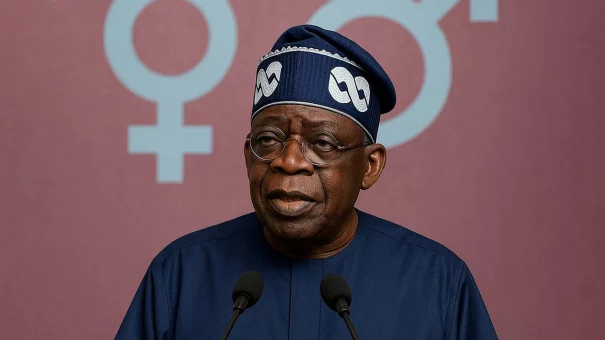
President Bola Tinubu, Nobel laureate Prof Wole Soyinka, and the Olubadan of Ibadanland, Oba Rashidi Ladoja, on Wednesday gathered in Lagos to reflect on Nigeria’s pro-democracy struggle during the unveiling of a new book documenting the activities of NADECO.
The book, titled “The NADECO Story,” written by National Democratic Coalition (NADECO) General Secretary Ayo Opadokun, was launched at the MUSON Centre in Onikan, Lagos.
The event brought together political leaders, academics, civil society actors, and veterans of Nigeria’s struggle against military rule, with speakers calling for continued defence of democratic values and historical accuracy in documenting the period.
Speaking on behalf of President Tinubu, former Ogun State Governor Chief Olusegun Osoba said the administration acknowledged the sacrifices of NADECO members and other activists who resisted military dictatorship in the 1990s.
He said their efforts helped preserve Nigeria’s democratic trajectory, noting that many endured exile, detention, harassment, and economic hardship during the struggle.
Tinubu, in his remarks, said the courage of pro-democracy activists laid the foundation for Nigeria’s current democratic system, urging younger generations to study the history of the era.
Prof Wole Soyinka described the book as a “historical correction,” praising its documentation of events surrounding the resistance to military rule.
He said the narrative of that period had often been distorted and stressed that the publication helped restore factual clarity.
Soyinka also reflected on the complexity of the struggle, noting that it involved multiple actors across different regions and even abroad, many of whom never received public recognition.
He paid tribute to late activist Dr Beko Ransome-Kuti and other lesser-known participants, saying their sacrifices were critical to the success of the movement.
Oba Rashidi Ladoja also recalled the turbulent political climate of the Abacha era, stating that the defence of democracy involved both visible protests and quiet, behind-the-scenes contributions.
He described himself as a lifelong democrat and emphasised that the June 12 struggle shaped both national and grassroots political experiences.
Author Ayo Opadokun said the book aimed to correct historical distortions and preserve the legacy of those who resisted military rule between 1994 and 1998.
He said Nigeria at the time stood “at the edge of political and moral collapse” but was saved through the sacrifices of activists, journalists, and international supporters.
Reviewer Prof Sylvester Akhaine described the work as a significant contribution to Nigeria’s political historiography, particularly in documenting the annulment of the June 12, 1993 presidential election and its aftermath.
He said the book also highlighted structural challenges in Nigeria’s governance, including military interference and elite political struggles.
The event concluded with awards presented to individuals, media organisations, and civil society groups recognised for their role in sustaining democratic advocacy during the period.