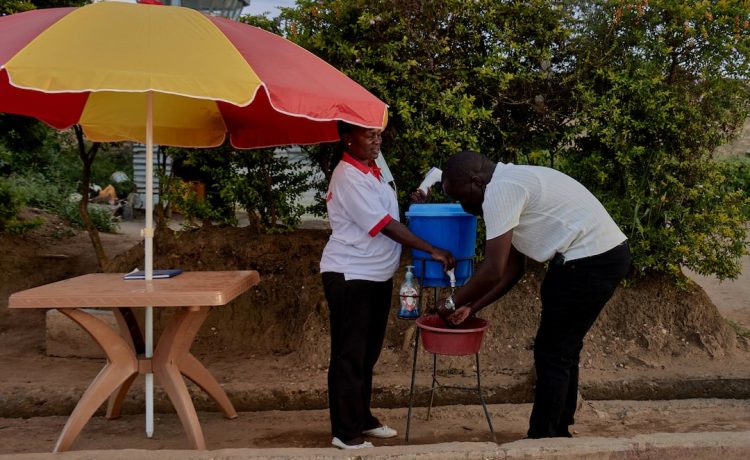
First responders battling the Democratic Republic of Congo’s 17th Ebola outbreak say severe shortages of basic medical supplies are hampering efforts to contain the virus in the conflict-hit northeast.
Health workers report a lack of essential items such as pain medication, face masks, protective equipment, and even motorbikes needed for contact tracing, making it increasingly difficult to control the spread of the disease.
The outbreak, driven by the rare Bundibugyo strain of Ebola, circulated undetected for weeks in remote parts of Ituri province before laboratory tests confirmed the infection last week.
Aid agencies are now rushing to deliver emergency supplies to the region, where weak health infrastructure and ongoing insecurity continue to complicate response efforts.
According to humanitarian groups, underinvestment in public health systems has long left Ituri vulnerable, with some organisations pointing to reductions in international funding as a key factor worsening the current shortage.
“Funding cuts have left the region dangerously exposed,” said Heather Reoch Kerr, Congo country director for the International Rescue Committee.
She added that reductions in donor-supported programmes have significantly limited the availability of personal protective equipment in local health facilities.
The World Health Organization declared the outbreak a public health emergency of international concern on May 16. As of Wednesday, there were about 600 suspected cases and 139 suspected deaths reported.
In response, the United States said it would fund up to 50 rapidly deployed treatment centres in Congo and neighbouring Uganda, where infections have also been recorded.
The WHO also confirmed it has airlifted 12 tonnes of medical supplies, with additional shipments expected in the coming days.
Despite these efforts, aid workers say available resources remain far below what is needed to contain the outbreak.
“We tapped into our contingency stocks, which include tents, protective equipment, medicines and laboratory equipment. These are not huge stocks, but they allow us to be agile and quick,” said Mamadou Kaba Barry of the NGO ALIMA.
“The resources are far below what is needed today,” he added.
Congo’s health ministry has announced plans to establish treatment centres in three locations, while 69 patients are currently receiving care in facilities that officials acknowledge are overstretched and under-equipped.
There are currently no approved virus-specific treatments for the Bundibugyo strain, meaning care is largely supportive, focusing on isolation, hydration, and pain management.
“We were not prepared to deal with an outbreak,” said Sandrine Lusamba of local NGO SOFEPADI, which operates a small hospital near Bunia. She said several suspected cases had been treated at the facility, with three deaths and two nurses falling ill.
Aid groups have also highlighted urgent shortages in surveillance and contact tracing resources, including vehicles needed to reach remote communities.
Experts say the delayed detection of the outbreak has weakened the response and left authorities playing catch-up.
“What we are starting to see in DRC but in many places, surveillance is a lot of what USAID had supported and that data collection is critical,” said Maria Guevara of Médecins Sans Frontières.
“We don’t have those surveillance capacities,” she added.
Bob Kitchen of the International Rescue Committee warned that the outbreak is likely larger than reported due to delays in detection.
“Twelve years after the major Ebola outbreak in West Africa, we should know that relying on treatment is a mistake,” he said.
The WHO’s Patrick Otim said the agency is working with UNICEF to deploy more motorbikes to improve contact tracing in the vast and difficult terrain of Ituri province.
Meanwhile, residents in affected areas say fear and confusion are spreading as communities adjust to renewed health restrictions.
“We first learned about it on the radio,” said Bunia resident Isabelle Mwendo. “But when I went to the market, I realized that I was almost alone and didn’t have a face mask.”
She added that she hoped people would comply with safety measures to help curb the outbreak.
Health officials warn that without rapid scaling up of resources, surveillance, and treatment capacity, containment of the outbreak may become increasingly difficult in the coming weeks.