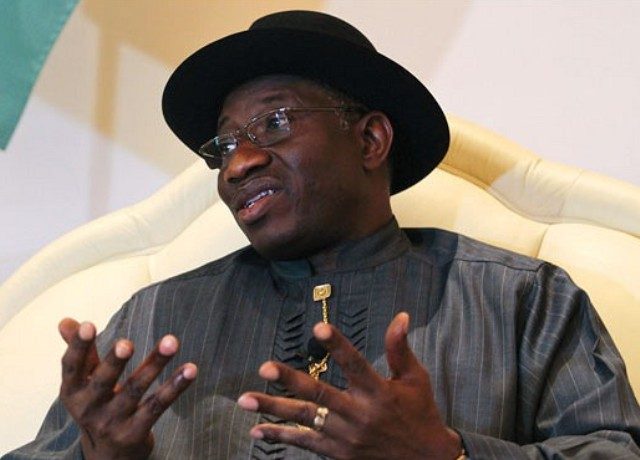
Former President Goodluck Jonathan has warned that Nigeria’s democracy could face a worsening legitimacy crisis if the judiciary continues to determine electoral outcomes instead of the ballot box.
Jonathan made the remarks on Wednesday at the opening ceremony of the Nigerian Bar Association Abuja Law Week 2026 held at the NBA House in Abuja, where he delivered a strong critique of Nigeria’s electoral and judicial processes ahead of the 2027 general elections.
He said the increasing tendency of politicians to resort to the courts after elections reflects a deep distrust in the electoral process and a belief that judicial outcomes can be influenced to overturn the will of the people.
According to him, Nigeria has reached a point where post-election litigation has become a parallel system for determining political power.
“The judiciary will do their work, but they should not declare any candidate. If they are not satisfied with the process of the election, then they should go back to the field. Let the ballot decide who wins,” he said.
Jonathan contrasted Nigeria’s experience with that of South Africa, noting that election disputes being settled in court is considered unusual in other democracies.
He also questioned inconsistencies in Nigeria’s electoral dispute resolution structure, pointing out that governorship election petitions pass through three levels of adjudication, while presidential cases pass through two.
“Are you telling me electing a governor is more important than electing a President?” he asked.
The former president further expressed concern over declining voter participation, noting that Nigeria recorded one of the lowest voter turnouts in Africa despite its population size.
He urged the Independent National Electoral Commission to investigate the root causes of voter apathy beyond commonly cited explanations.
Jonathan also criticised the rise of political thuggery, describing it as a system that has become normalised and even financially rewarding in some cases.
“Nigeria is the only country where thuggery is a profession. Some thugs, when they are travelling out of this country, fly first class while university professors struggle to buy economy tickets,” he said.
He called for urgent reforms in Nigeria’s electoral and judicial systems, including the possibility of establishing a Constitutional Court dedicated to electoral disputes.
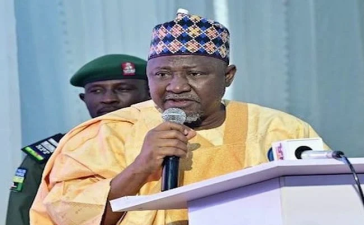
Former Attorney General of the Federation, Mohammed Adoke, who also spoke at the event, said Nigeria’s democracy remains fragile despite over two decades of civilian rule.
He warned that voter turnout of 27 per cent in the 2023 general elections reflected declining public confidence in the electoral process, while electoral violence claimed dozens of lives.
Adoke also criticised vote-buying, weak internal party democracy, and poor enforcement of electoral laws, arguing that they have turned elections into economic transactions rather than democratic exercises.
He further warned that excessive reliance on courts to resolve political disputes is gradually weakening the role of voters in choosing leaders.
“The phrase ‘go to court’ has become a silent reminder that the electorate’s participation in determining leaders is gradually eroding,” he said.
Adoke, however, praised Jonathan for his 2015 concession of defeat, describing it as a defining moment in Nigeria’s democratic history.
Nigerian Bar Association President, Afam Osigwe (SAN), also expressed concern over the growing role of the judiciary in electoral outcomes, warning that democratic legitimacy must always rest with the people.
He noted that political power is increasingly being obtained through violence, thuggery, and electoral manipulation rather than credible democratic processes.
The event, attended by senior judicial officers, legal practitioners, and civil society representatives, focused on strengthening Nigeria’s democratic institutions ahead of the 2027 elections.