The United States has begun enforcing a new law requiring technology platforms to remove sexual deepfakes and other non-consensual intimate imagery, marking a major step in efforts to curb the spread of AI-generated explicit content online.
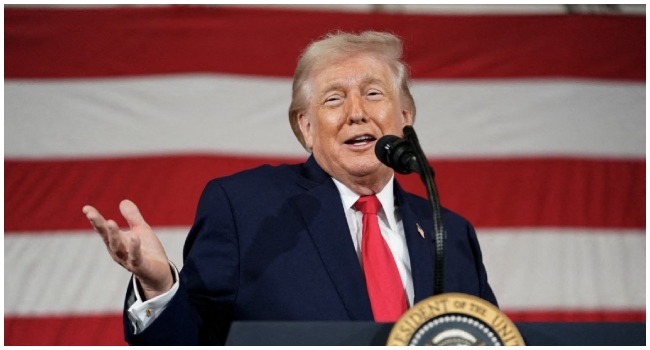
President Donald Trump signed the Take It Down Act into law last year, criminalising the online distribution of non-consensual sexual imagery, much of which is now created using widely available artificial intelligence tools.
Under the law, the Federal Trade Commission (FTC) has directed major tech platforms to establish systems that allow victims to request removal of such content, with companies required to take it down within 48 hours of receiving a valid request or face penalties.
FTC Chairman Andrew Ferguson said the agency would actively enforce compliance across the tech industry, noting that letters had been sent to more than a dozen companies, including Meta, TikTok, X, and Snapchat.
“We stand ready to monitor compliance, investigate violations, and enforce the Take It Down Act,” Ferguson said, adding that protecting vulnerable groups, especially children, remains a top priority.
The enforcement comes amid growing concern over the rapid rise of AI-generated explicit content, which experts say is increasingly difficult to detect and regulate.
In response, platform X stated that it maintains a strict zero-tolerance policy on non-consensual intimate imagery and exploitative content.
However, the rollout of the law has sparked debate among digital rights advocates and legal experts, who warn that it could create unintended consequences for online speech.
Riana Pfefferkorn, a policy fellow at the Stanford Institute for Human-Centered Artificial Intelligence, described the law’s takedown mechanism as a “shoot first, ask questions never” approach, arguing that it incentivises rapid removal of content even when its legitimacy is unclear.
She also raised concerns that the law could be misused to target marginalised groups, including transgender individuals, sex workers, and political speech that may be controversial but lawful.
Free speech advocates similarly caution that platforms may adopt overly aggressive moderation policies to avoid liability, potentially leading to the removal of legitimate content.
The debate comes as the global spread of AI tools, including so-called “nudification” applications, has fuelled a surge in non-consensual deepfake content, outpacing regulatory responses in many jurisdictions.
High-profile figures such as singer Taylor Swift have previously been targeted, but researchers say the majority of victims are ordinary individuals, particularly women and teenagers.
Reports of AI-generated explicit content have increased in schools across the United States, with cases emerging in states including California and New Jersey, where students have been targeted by classmates.
Experts warn that such content can lead to harassment, blackmail, and severe psychological harm, underscoring the urgency of regulatory responses alongside concerns about digital rights protections.