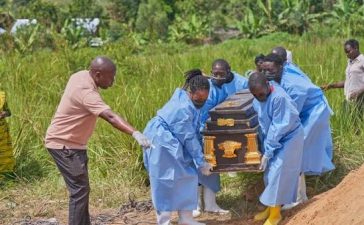
The Nigeria Civil Aviation Authority (NCAA) has directed airlines, airport operators, and other aviation stakeholders to intensify public health surveillance following the outbreak of Ebola Virus Disease (EVD) in parts of the Democratic Republic of the Congo and Uganda.
In a circular dated May 18, 2026, the NCAA said the directive was necessary due to rising concerns about the spread of the disease and the aviation sector’s critical role in preventing cross-border transmission.
The authority noted that although no confirmed Ebola case linked to the outbreak has been recorded in Nigeria, it is working closely with the Federal Ministry of Health, the Nigeria Centre for Disease Control and Prevention, Port Health Services, and international health organisations to monitor the situation.
According to the NCAA, health authorities in the DRC recently identified a cluster of severe illnesses among healthcare workers in the Bunia Health Zone in the northeastern region of the country.
Laboratory tests confirmed the presence of the Bundibugyo virus, a strain of the Ebola virus family known to cause severe viral haemorrhagic disease in humans.
The authority warned that there is currently no licensed vaccine specifically approved for the Bundibugyo strain, while treatment remains largely supportive.
The NCAA listed symptoms of Ebola Virus Disease to include sudden fever, severe fatigue, persistent headache, vomiting, abdominal pain, and bleeding symptoms such as nosebleeds or vomiting blood.
It stressed that early detection and prompt reporting are critical to preventing international spread.
As part of preventive measures, the authority said airport disease surveillance systems have been strengthened, alongside enhanced contact tracing, case reporting, and border health screening procedures.
Airlines were instructed to notify Air Traffic Control of any suspected communicable disease cases onboard aircraft in line with Nigeria Civil Aviation Regulations.
The NCAA also directed flight crews to complete and submit Aircraft General Declaration forms for suspected cases and ensure passenger locator forms are handed over to Port Health Services upon arrival.
Operators were further instructed to ensure aircraft are equipped with adequate first aid kits, universal precaution kits, and emergency medical kits.
The authority urged airlines to reinforce crew training on communicable disease detection and ensure strict adherence to infection prevention protocols.
The NCAA called on all aviation stakeholders to remain vigilant and comply fully with public health guidelines to protect passengers, crew members, and the general public.