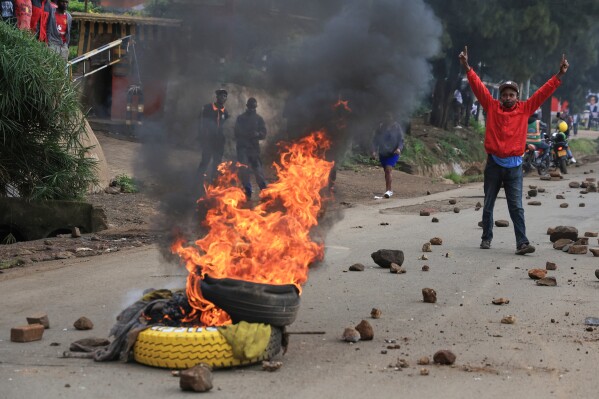
At least four people have been killed during nationwide transport protests in Kenya, the country’s interior minister has confirmed, as anger over rising fuel prices brought major cities to a standstill.
The unrest erupted on Monday after public transport operators launched a strike that removed thousands of “matatu” minibuses from the roads, leaving commuters stranded across the country.
Protests were reported in major urban centres including Nairobi, Mombasa, Nakuru, Eldoret and Nyeri, where demonstrators blocked highways, lit bonfires and disrupted traffic flow.
Security forces were deployed to multiple hotspots as tensions escalated between protesters and police, though authorities have not yet released detailed circumstances surrounding the reported fatalities.
The strike was triggered by sharp increases in fuel prices, including a 23.5 percent rise in diesel costs, which officials attributed to global oil market shocks linked to instability in the Middle East and disruptions in the Strait of Hormuz.
Kenya, which relies heavily on imported fuel, has been particularly vulnerable to fluctuations in international energy prices.
Interior officials confirmed the deaths while noting that investigations into the incidents were ongoing.
A protester described widespread frustration over the rising cost of living, accusing authorities of failing to respond adequately to public concerns about fuel pricing.
The strike severely disrupted daily life, with schools closed, businesses shuttered early, and major roads in Nairobi unusually empty compared to typical traffic congestion.
Government officials defended the fuel price adjustments, stating they were necessary due to global market conditions and fiscal pressures.
However, critics argue that domestic taxation has worsened the impact on consumers already struggling with inflation and high living costs.
Economic analysts warn that prolonged unrest could further damage Kenya’s economy, with each day of disruption costing significant losses to businesses and households.
The protests highlight growing economic pressure across the region as fuel-dependent economies grapple with global energy volatility.