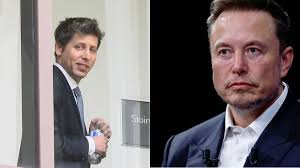
Jury deliberations are set to begin Monday in the closely watched legal battle between Elon Musk and OpenAI, a case that could reshape the future of one of the world’s most influential artificial intelligence companies.
The blockbuster trial, taking place in Oakland near San Francisco, has featured testimony from several prominent Silicon Valley executives and technology insiders over the past three weeks.
Musk alleges that OpenAI abandoned its original nonprofit mission of developing artificial intelligence for the benefit of humanity and instead transformed into a profit-driven technology giant focused on commercial expansion.
The lawsuit targets OpenAI Chief Executive Officer Sam Altman and co-founder Greg Brockman, whom Musk accuses of misusing a $38 million donation he made to support OpenAI as a nonprofit AI research organisation.
OpenAI, which gained global prominence following the launch of ChatGPT in 2022, is now valued at an estimated $850 billion and has become one of the most valuable private companies in the world.
Legal analysts say a victory for Musk could significantly disrupt OpenAI’s corporate structure and future growth plans.
During closing arguments on Thursday, Musk’s attorney, Steven Molo, argued that OpenAI betrayed the principles upon which it was founded.
“A non-profit devoted to the safe development of artificial intelligence, open sourced as practical, for the benefit of humanity. You know, we’re supposed to buy that,” Molo told the court while challenging Altman’s credibility.
OpenAI’s legal team responded by questioning Musk’s own credibility and motivations.
Attorney Sarah Eddy argued that even individuals close to Musk disputed parts of his account.
“Even the people who work for him, even the mother of his children, can’t back his story,” Eddy said, referring to Shivon Zilis, a business associate of Musk who testified during the proceedings.
Zilis, who shares four children with Musk, reportedly served as an intermediary between the technology executives involved in the dispute.
Musk left OpenAI in 2018 and later pursued separate artificial intelligence projects through SpaceX and his AI startup xAI.
However, xAI has struggled to match the rapid growth and industry influence achieved by OpenAI and rival AI firm Anthropic.
Much of the trial also focused on allegations surrounding Altman’s leadership style and internal conflicts within OpenAI.
Altman was briefly removed as CEO by OpenAI’s board in November 2023 over concerns regarding transparency and communication before being reinstated after pressure from employees and investors.
The nine-member jury must first determine whether Musk filed the lawsuit within the legal time limit. Musk initiated the suit in 2024, roughly four years after his final financial contribution to OpenAI.
Judge Yvonne Gonzalez Rogers said the jury’s finding on that issue would be advisory but indicated she would likely follow its recommendation.
If the case proceeds beyond that threshold issue, jurors and the court will then consider whether OpenAI’s founders improperly redirected Musk’s donations toward commercial objectives and personal enrichment.
Musk is seeking a court order requiring OpenAI to return to its nonprofit structure.
Such a ruling could force the company to abandon any future plans for a public listing and potentially unwind relationships with major investors including Microsoft, Amazon, and SoftBank Group, all of which have invested billions of dollars in OpenAI amid the escalating global AI race.
The jury will also examine whether Microsoft, OpenAI’s largest financial backer with approximately $13 billion invested, knowingly supported the company’s shift away from its original nonprofit framework.
The case is being closely watched across the global technology industry, where the rapid commercialisation of artificial intelligence has intensified debates over ethics, governance, and the balance between innovation and public interest.