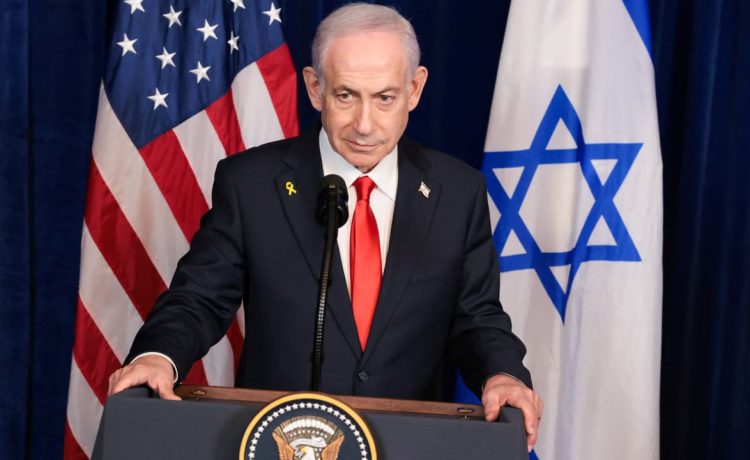
Israeli Prime Minister Benjamin Netanyahu has revealed plans to gradually end Israel’s dependence on United States military financial support within the next decade as the country strengthens strategic ties with Gulf nations.
Netanyahu made the disclosure during an interview aired on the CBS News programme 60 Minutes on Sunday.
“I want to draw down to zero the American financial support, the financial component of the military cooperation that we have,” Netanyahu said during the interview.
According to him, Israel currently receives about $3.8bn in annual military aid from the United States under an existing agreement that provides a total of $38bn in assistance between 2018 and 2028.
The Israeli leader stated that the time was “absolutely” right to reconsider the financial structure of U.S.-Israel military relations.
“I don’t want to wait for the next Congress,” Netanyahu said. “I want to start now.”
Israel has traditionally enjoyed strong bipartisan backing within the United States Congress regarding military aid packages, but public and political support has weakened since the outbreak of the Gaza war in October 2023.
A recent survey by the Pew Research Center reportedly showed that 60 per cent of American adults now hold an unfavourable view of Israel, while 59 per cent expressed little or no confidence in Netanyahu’s handling of global affairs.
Both figures represented a seven-percentage-point increase from the previous year.
Netanyahu attributed the declining support for Israel in the United States largely to the influence of social media platforms.
He claimed that several unnamed countries had manipulated social media narratives in ways that negatively affected Israel’s global image.
“Several countries have basically manipulated social media in a way that hurt us badly,” he stated, while adding that he did not personally support censorship.
The comments also come amid growing pressure surrounding the ongoing conflict involving Iran.
Support for Donald Trump, a close ally of Netanyahu, has reportedly weakened following the military confrontation involving the United States, Israel and Iran that began on February 28.
The conflict has contributed to rising global fuel prices and renewed concerns over energy supply disruptions.
According to reports, inflation in the United States rose in March to its highest annual rate since May 2023, partly driven by increased gasoline prices linked to instability in the Middle East.
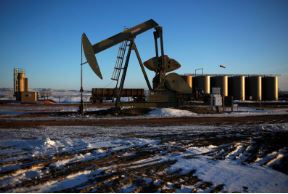
A major concern has been Iran’s actions around the Strait of Hormuz, a critical global shipping route through which roughly 20 per cent of the world’s oil supply passes.
Netanyahu acknowledged that Israeli planners initially underestimated Iran’s ability to disrupt shipping activities through the strait.
“Only after the war began did Israeli planners recognize Iran’s ability to close the strait,” he said.
“It took a while for them to understand how big that risk is, which they understand now,” Netanyahu added.
The Israeli leader’s remarks signal a potential shift in the long-standing security and financial relationship between Israel and the United States, while also reflecting broader geopolitical changes across the Middle East.