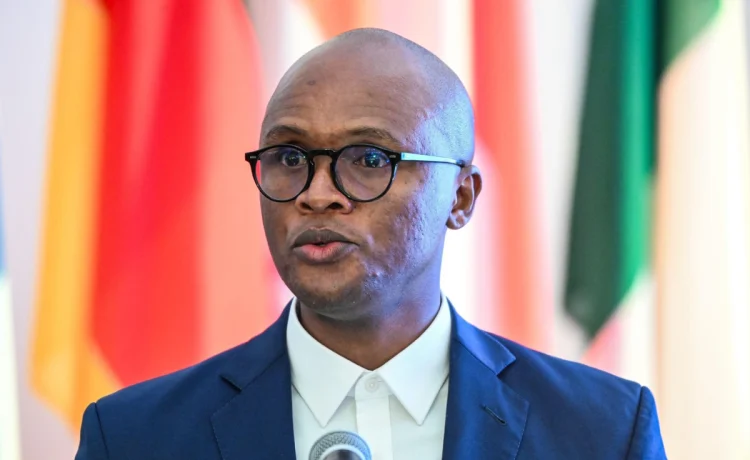
South Africa’s Minister of Communications and Digital Technologies, Solly Malatsi, has withdrawn the country’s Draft National Artificial Intelligence Policy after it was discovered that the document contained fictitious and unverifiable sources in its reference list.
The minister announced the decision in a statement shared on his official X account on Sunday, describing the incident as a serious breach that undermined the credibility and integrity of the proposed national framework for artificial intelligence governance.
According to Malatsi, internal reviews were launched after concerns were raised about questionable citations in the draft document. The investigation confirmed that several referenced sources did not exist.
He said the failure went beyond a technical mistake and pointed to a breakdown in quality control within the Department of Communications and Digital Technologies.
“This failure is not a mere technical issue but has compromised the integrity and credibility of the draft policy. As such, I am withdrawing the Draft National Artificial Intelligence Policy,” he said.
Malatsi added that preliminary findings suggest AI-generated citations may have been inserted into the document without proper human verification, highlighting risks associated with the use of generative AI tools in official government processes.
“The most plausible explanation is that AI-generated citations were included without proper verification. This should not have happened,” he said, warning that stronger oversight is required when deploying AI systems in policymaking.
He emphasised that the government would implement accountability measures following the incident, stating that “consequence management” would be applied to officials involved in drafting and reviewing the policy.
The controversy follows reporting by South African media outlet News24, which alleged that the draft contained at least six fabricated references. Experts cited in the report suggested the issue was consistent with “AI hallucinations,” where systems generate realistic but false academic or policy citations.
The withdrawal effectively resets South Africa’s national AI policy process and is expected to delay the country’s efforts to establish a formal regulatory framework for artificial intelligence development and adoption.
South Africa has been among the early African nations developing structured AI policy guidelines, as governments across the continent increasingly move to regulate the rapidly growing technology sector.
The incident has also drawn regional attention, coming at a time when other countries are advancing their own national AI strategies. In Nigeria, for example, Minister Bosun Tijani recently announced that the country’s National Artificial Intelligence Strategy had been completed and was awaiting final legislative approval.
Tijani stated that Nigeria’s framework was expected to be approved by lawmakers within weeks, although formal adoption is still pending.
The South African case is now being seen as a cautionary example of the risks of relying too heavily on AI-generated content in sensitive government work without strict verification processes.
Officials say a revised policy process will be launched after a full review and corrective measures are put in place.