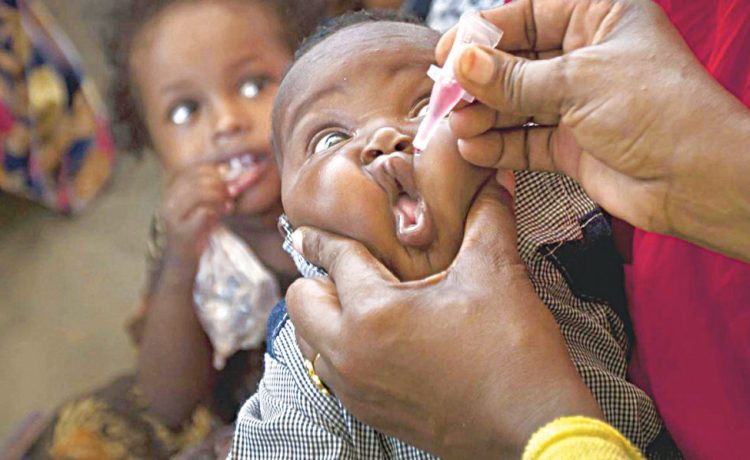
Katsina State has recorded 11 consecutive months without a new polio case following a large-scale immunisation campaign that reached more than 2.9 million children, according to Heartland Alliance LTD/GTE (HALG).
The milestone was announced on Friday to mark World Immunisation Week 2026, themed “for every generation, vaccines work.”
Chief Executive Officer of HALG, Dr Bartholomew Ochonye, described the development as significant progress in a state previously classified among Nigeria’s high-risk areas for polio transmission. However, he cautioned that the achievement remains fragile.
“Eleven months without a new polio case in a state that was once among Nigeria’s highest-risk geographies is real progress,” Ochonye said. “But the poliovirus needs only one missed child to persist.”
He stressed that identifying and reaching every child remains critical to sustaining gains made so far.
According to HALG, the immunisation campaign, which intensified as of March 2026, vaccinated over 2.9 million children across Katsina State, helping prevent new cases of circulating vaccine-derived poliovirus type 2 (cVDPV2).
Despite the progress, the campaign also uncovered significant gaps in Nigeria’s immunisation coverage. More than 50,000 children were identified as “zero-dose,” meaning they had never received any form of vaccination prior to the intervention.
“These are not abstract numbers,” Ochonye said. “They are real children in hard-to-reach settlements, many of whom were never captured in official data.”
The intervention, which began in April 2025, involved over 4,000 field teams conducting house-to-house surveys across 2,356 hard-to-reach settlements. The teams reached more than 836,000 households and vaccinated over 1.6 million children in the first phase alone, surpassing initial targets by 166 percent.
HALG also carried out a statewide micro-planning exercise across all 34 local government areas in Katsina, mapping settlements to improve vaccine delivery and ensure no community was left behind.
Public health experts say such detailed planning is essential in northern Nigeria, where insecurity, weak data systems, and vaccine hesitancy have historically hindered immunisation efforts.
Global health data from the World Health Organisation shows that nearly 20 million children missed at least one vaccine dose in 2024, with over 14 million receiving none at all, many of them in underserved communities across sub-Saharan Africa.
Despite the progress in Katsina, HALG warned that major challenges persist, including insecurity in some settlements, vaccine hesitancy, and limitations in cold-chain infrastructure needed to preserve vaccine potency in remote areas.
Ochonye noted that the discovery of over 50,000 zero-dose children in just 17 local government areas suggests a broader national immunisation gap that may extend beyond Katsina.
Health stakeholders have called for sustained investment in last-mile immunisation systems, stronger community engagement, and improved monitoring frameworks to prevent a resurgence of preventable diseases.
Nigeria was certified free of wild poliovirus in 2020, but outbreaks of circulating vaccine-derived poliovirus continue to pose risks, particularly in regions with low vaccination coverage.