The question of youth inclusion in leadership and national development took centre stage on Monday at a high-level summit held at the State House Banquet Hall, Abuja, where government officials, policymakers, and development experts explored strategies for strengthening young people’s role in governance.
The event, the 2026 Abuja Dialogue, was organised by the Office of the Vice President in collaboration with the Lateef Jakande Leadership Academy (LJLA) under the theme “Scaling Excellence: Youth Leadership as Strategic Infrastructure for National Transformation.”
Vice President Kashim Shettima said Nigeria must adopt a structured and institutionalised approach to leadership development in order to transform its large youth population into national capacity.
He warned that without deliberate systems for mentoring and integrating young people into governance, the country risks weakening its institutional foundations.
“What is required is a forward-looking architecture of leadership development… We cannot prepare young Nigerians for yesterday and expect them to govern tomorrow,” Shettima said.
He emphasised that leadership should not be viewed as ceremonial succession, but as a continuous process of preparation involving mentorship, responsibility, and institutional exposure. According to him, sustainable national progress depends on building a pipeline of capable leaders across sectors.
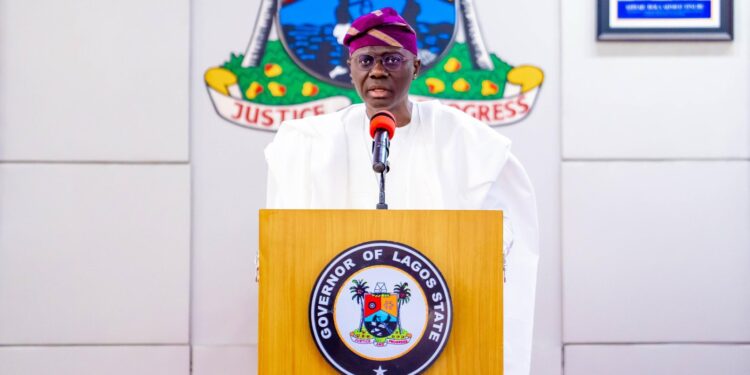
Lagos State Governor Babajide Sanwo-Olu also stressed that youth participation in leadership is no longer debatable, arguing instead that the focus should be on whether institutions are adequately prepared to harness young people’s potential.
Sanwo-Olu said Lagos has prioritised investment in human capital alongside physical infrastructure, noting that governance systems cannot succeed without competent leadership.
“In Lagos, we invest billions in roads, bridges, rail systems… but without competent, ethical, and visionary leaders, every policy we design will fail in implementation,” he said.
He described leadership development as a strategic pillar of governance and warned that neglecting youth capacity building could result in long-term economic and social setbacks, including brain drain.
Minister of Youth Development Ayodele Olawande led youth representatives and stakeholders to the summit, which also featured senior government officials, business leaders, academics, and civil society actors.
Executive Secretary of the Lateef Jakande Leadership Academy, Ayisat Agbaje-Okunade, said the dialogue was designed to address barriers preventing effective transition of leadership to younger generations.
She noted that leadership is a developmental process requiring exposure, mentorship, accountability, and real-world experience within governance systems.
“Leadership is not learned only in classrooms; it is learned in systems,” she said.
Participants agreed that sustainable national development depends on deliberately identifying, nurturing, and integrating young leaders into decision-making structures, rather than treating youth participation as symbolic.
The summit concluded with a consensus that leadership development must be treated as strategic infrastructure—on par with physical development projects—to ensure long-term national stability and progress.