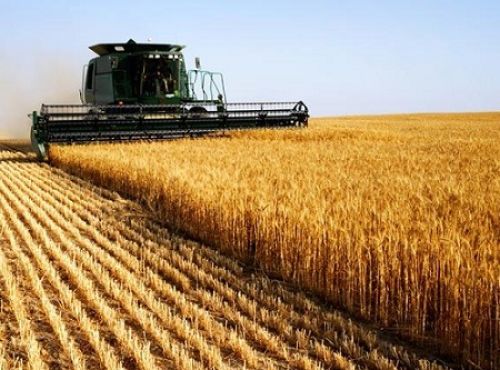
Morocco’s agricultural sector is projected to expand by 15% in 2026, Prime Minister Aziz Akhannouch announced Thursday at a weekly press briefing following a cabinet meeting.
Akhannouch attributed the growth, which is expected to bolster the national economy, to the return of rains that have improved production prospects despite flooding in parts of the north and west. Official data show that between September 1, 2025, and March 11, 2026, cumulative rainfall reached 462 millimeters — 134% of last year’s level and 56% above the 30-year average.
The improved weather conditions mark the end of a seven-year drought that had cost the sector nearly one million jobs, signaling a broad recovery across agricultural activities.
Government spokesman Mustapha Baitas reported that areas planted with durum wheat, soft wheat, and barley now cover 3.9 million hectares, a 48% increase from the previous year. Land devoted to sugar crops, including sugar beet and sugarcane, rose 21% year-on-year to 44,000 hectares, although 11,000 hectares were affected by flooding.
Baitas also highlighted state subsidies to farmers and support through subsidized fodder barley, aimed at rebuilding the livestock population, which has been severely depleted by drought. Official figures indicate Morocco has lost 38% of its cattle and sheep since 2016, which previously led to the cancellation of the traditional sheep sacrifice for Eid al-Adha in February 2025 due to scarcity.
Stronger agricultural output is also expected to reduce reliance on imports. Preliminary projections from the High Commission for Planning show national cereal production could exceed 8 million metric tons in the 2025/2026 season, nearly 80% more than the 4.4 million metric tons recorded in 2024/2025. This would make it the best harvest since the 2020/2021 season, when output reached 10.3 million metric tons.
Morocco’s agricultural sector contributes roughly 10% of gross domestic product and employs more than a third of the country’s active workforce, underlining its importance to economic stability and food security.