Iran has vowed not to submit to what it described as “lawless aggression,” warning that its 90 million citizens are facing grave danger amid ongoing military strikes by the United States and Israel.
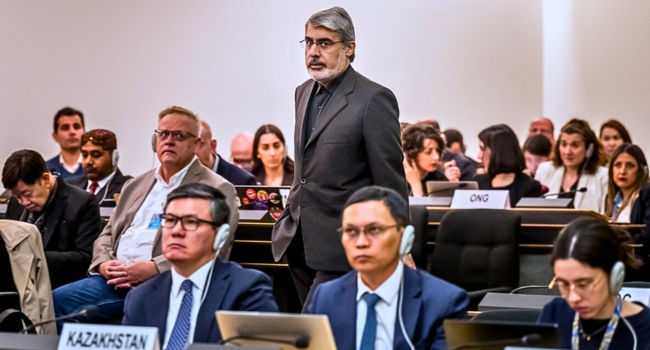
Speaking at the United Nations Human Rights Council in Geneva on Monday, Iran’s ambassador, Ali Bahreini, criticised the international community’s focus on Tehran’s internal affairs, insisting that the primary concern should be the external military aggression against his country.
“The most urgent and fundamental human rights issue concerning Iran is the imminent threat to the lives of 90 million people whose lives are in immediate and grave danger under the shadow of reckless military aggression,” Bahreini said.
He warned that failure to address such actions could set a dangerous precedent, adding that Iran would not yield to coercion or intimidation.
The tensions follow coordinated military strikes launched on February 28 by the United States and Israel, prompting retaliatory attacks by Iran across multiple locations in the Middle East.
Iran has also accused both countries of targeting civilian infrastructure, including a reported missile strike on a school in Minab, which Washington says it is investigating. According to Bahreini, more than 1,300 people have been killed and over 7,000 injured since the strikes began.
During the session, discussions also focused on Iran’s domestic human rights record, with UN experts raising concerns about a deadly crackdown on protesters in recent months.
The UN Special Rapporteur on human rights in Iran, Mai Sato, described the US-Israeli strikes as unlawful regardless of their stated objectives, while warning that repression within Iran could worsen amid the ongoing conflict.
She noted that thousands of deaths have been reported during nationwide protests that began late last year, adding that the war has exacerbated an already critical human rights situation.
Global reactions to the crisis were mixed. Russia condemned the United States and Israel, accusing them of attempting to destabilise Iran, while China expressed grave concern and called for an immediate ceasefire and return to dialogue.
Meanwhile, United Kingdom urged a swift return to stability and cautioned Iran against escalating violence, while France emphasised the need for a lasting diplomatic solution to end the conflict.
The Human Rights Council session formed part of an ongoing dialogue involving member states and UN investigators examining both the external conflict and internal human rights conditions in Iran.