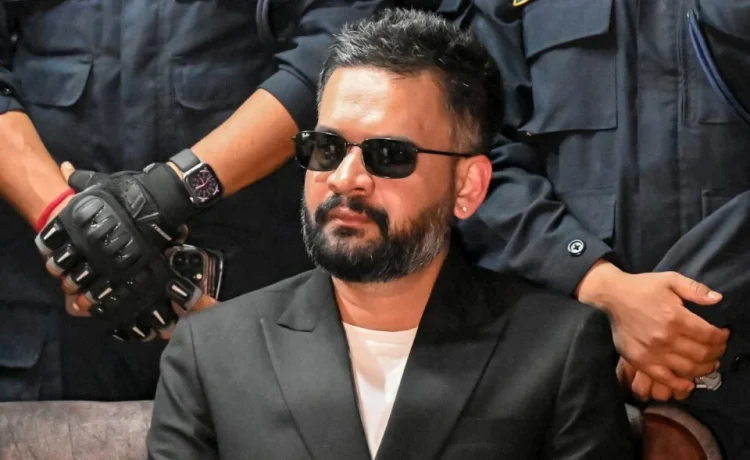
With nearly all votes counted in Nepal, rapper-turned-politician Balendra Shah is on track to become the country’s next prime minister after his party secured a commanding lead in the parliamentary elections.
Officials said on Wednesday that only two percent of votes remain to be counted. Shah’s centrist Rastriya Swatantra Party (RSP) has already secured a clear majority in the election.
The 35-year-old leader’s rapid rise has stunned many observers. Shah first gained national attention as the mayor of Kathmandu. Now, he appears poised to lead the country.
The parliamentary election took place on March 5. It was the first vote since youth-led anti-corruption protests toppled the government in September last year. The protests turned deadly and forced major political change across the country.
In one of the biggest shocks of the election, Shah defeated former prime minister KP Sharma Oli in his own constituency. Oli had served as prime minister four times and led the Marxist government that was removed during last year’s unrest.
During the campaign, Shah’s popularity grew quickly. Videos of voters copying his signature dance moves went viral on social media, showing his strong appeal among young people.
Voters were choosing members for a new 275-seat House of Representatives. Out of these, 165 seats were decided through direct voting, while 110 seats were allocated through proportional representation.
Official results show that RSP won 125 of the 165 directly contested seats. That equals about three-quarters of the total.
In the proportional representation vote, RSP is also leading. The party has nearly half of the ballots counted so far, with just over 200,000 votes still to be processed.
“We are close to finishing the counting now,” said Narayan Prasad Bhattarai, a spokesman for the Election Commission.
If the final numbers follow the current trend, RSP could win around 176 seats in total. That would give the party a strong majority, though it would still fall short of the 183 seats needed for a constitutional supermajority.
Experts say the final seat distribution could change slightly depending on how votes for smaller parties are calculated.
According to constitutional law expert Bipin Adhikari of Kathmandu University, the process of forming a new government could take more than a week.
“Once the Election Commission submits its report to the president, he will invite RSP lawmakers to name their prime ministerial candidate,” Adhikari said.
Meanwhile, traditional parties suffered major losses. The Nepali Congress, which was the largest party in the previous parliament, won just 18 seats in the direct elections. The Marxist party led by Oli secured only nine.
The final results are expected soon, but Shah’s victory already signals a dramatic shift in Nepali politics.