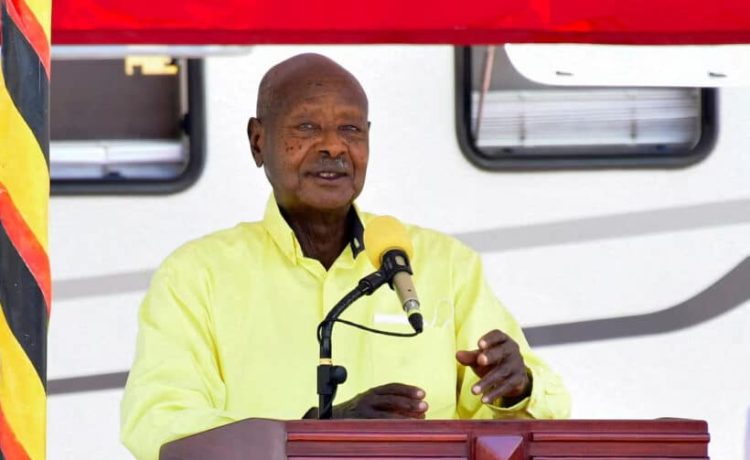
When Yoweri Museveni seized power in Uganda in 1986, he declared that “the problem of Africa in general and Uganda in particular is not the people but leaders who want to overstay in power.”
Nearly four decades later, the 81-year-old former rebel leader is seeking a seventh term in office as Ugandans head to the polls on Thursday, a move that underscores his status as one of Africa’s longest-serving presidents.
Museveni rose to power on a wave of optimism after leading insurgencies against autocratic regimes, promising a fundamental shift in governance. However, the goodwill that marked his early years has gradually eroded amid allegations of corruption and authoritarianism.
“Corruption has been central to his rule from the beginning,” Kristof Titeca, a professor at the University of Antwerp, told Reuters.
Museveni has acknowledged that corruption exists within government, insisting that officials found culpable have been prosecuted.
A skilled political strategist, Museveni has strengthened Uganda’s international standing by aligning closely with Western security interests. His government has deployed peacekeepers to conflict zones such as Somalia and South Sudan, while also hosting one of the largest refugee populations in Africa.
Domestically, his record remains mixed. His administration earned praise for combating the AIDS epidemic and defeating the Lord’s Resistance Army, which terrorised northern Uganda for nearly 20 years. Yet corruption has weakened public institutions and service delivery.
According to UNICEF, only one in four Ugandan children who start primary school reach secondary education, while unemployment and underemployment persist, particularly among the youth.
Museveni’s political journey began in exile, where he founded a militant movement that contributed to the overthrow of Idi Amin. After Milton Obote returned to power in 1980 and was later ousted in a 1985 coup, Museveni’s National Resistance Movement toppled President Tito Okello in 1986.
“This is not a mere change of guard. This is a fundamental change in the politics of our government,” Museveni declared at his swearing-in.
Western governments initially praised his efforts to restore stability, attract foreign investment, and improve living standards. But as economic growth gained momentum, public anger over corruption intensified.
Under a privatisation programme, dozens of state-owned enterprises were sold at discounted prices to Museveni’s relatives and allies, according to parliamentary reports, some of which alleged that proceeds were embezzled.
Kizza Besigye, Museveni’s former personal doctor during the bush war, later became one of his fiercest critics, accusing him of corruption and human rights abuses. Museveni has won all six presidential elections he has contested, four of them against Besigye, who was arrested in 2024 and now faces treason charges.
In 2005, Uganda’s parliament scrapped presidential term limits, a move widely criticised as paving the way for Museveni’s prolonged stay in power. Opposition candidates have repeatedly rejected election results, citing irregularities, allegations the authorities deny.
Police have frequently clamped down on opposition protests, while Museveni has dismissed Western criticism, once saying, “If the international community has lost confidence in us, then that is a compliment because they are habitually wrong.”
In recent years, he has diversified Uganda’s foreign partnerships, strengthening ties with China, Russia, Iran, and the United Arab Emirates. The discovery of major oil reserves further bolstered his position, leading to agreements with TotalEnergies and China’s CNOOC to develop an export pipeline.
Museveni’s main challenger in Thursday’s election is Bobi Wine, a 43-year-old pop star turned opposition politician who has mobilised strong support among young voters.
While analysts say Museveni’s victory appears almost certain, uncertainty surrounds what comes next, particularly as the president shows signs of physical frailty.
“The big question looming over the election is the question of succession,” Titeca said, pointing to the rising profile of Museveni’s son, Muhoozi Kainerugaba, Uganda’s military chief.
The opposition has accused Museveni of grooming Kainerugaba for succession, allegations the government denies, even as veteran politicians who once fought alongside the president have been sidelined.
Former newspaper editor Charles Onyango-Obbo said the election outcome could influence Museveni’s future political calculations.
“This is less about the results that will be announced, and more about the mood on the ground,” Onyango-Obbo said, adding that any handover of power could still be years away.
“Museveni is more frail now, but he is a workaholic… he will not leave even if he needs to use a walking stick,” he said.